Classical Music – issue #12
Classical music generally refers to the art music of the Western world. Classical music is often characterized by formality and complexity in its musical form and harmonic organization. particularly with the use of polyphony, music in which several different tunes are played or sung at the same time. Since the ninth century, it has been primarily a written tradition, spawning a sophisticated notational system.
Rooted in the patronage of churches and royal courts in Europe. early medieval music is Chiefly Religious monophonic and vocal. The Baroque period (1580–1750) saw the relative standardization of common-practice tonality. Together with, the increasing importance of musical instruments, which grew into ensembles of considerable size. The common-practice period was a period in which the tonal system was regarded as the only basis for composition. The word tonality is sometimes used as a synonym for “key.”.In the shorter but pivotal Classical period (1730–1820), composers such as Mozart created widely admired examples of absolute music. including symphonies, string quartets and concertos. Absolute music (sometimes abstract music) is instrumental music not intended to represent or illustrate something else. The ensuing Romantic music (1800–1910) focused instead on programmatic music. the art song, symphonic poem and various piano genres were important vessels. Program music is often written so that the notes themselves convey, to some degree, the meaning of what is portrayed.
Thus the thunderstorm in Beethoven’s symphony includes loud timpani strokes to convey the thunder. The shrill piccolo music to depict the shrieking winds. During this time virtuosity was celebrated, immensity was encouraged, while philosophy and nationalism were embedded. all aspects that converged in the operas of Richard Wagner.By the 20th century, the prominence of popular music greatly increased. Many Classical composers actively avoided past techniques and genres in the lens of modernism. with some abandoning tonality in place of serialism.a serial pattern in music is merely one that repeats over and over within a composition. The term serial music is often used interchangeably with 12-tone music. However, the latter is more properly an example of the former. others found new inspiration in folk melodies or impressionist sentiments.Trends of the mid-20th century to the present day include New Simplicity, New Complexity, Minimalism, Spectral music. more recently Postmodern music and Postminimalism.
Join the Conversation!!!
we will Feature Significant Compositions from Artists representative of the various classical Periods. We Hope to encourage Listeners of all tastes and passions. So Get your Headphones on and Consider discussing the musical Offering and sharing your views with like-minded peers.
In Issue #12, we feature Richard Strauss
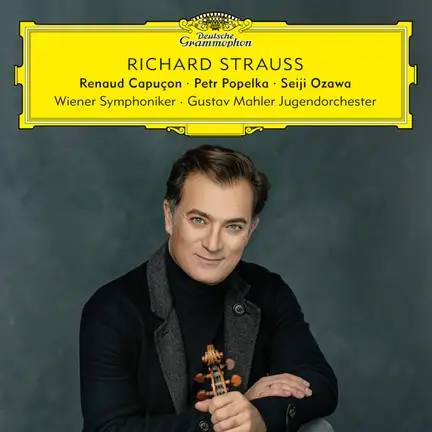
The Violin Sonata in E-flat major, Op. 18, composed in1887, stands as one of his most celebrated chamber music compositions. Written when the composer was just 23 years old, it represents the absolute pinnacle and conclusion of his early period of traditional chamber music. Classical three-movement form: I. Allegro, ma non troppo: This movement starts with a brief, majestic piano solo before introducing a heroic, soaring melody in the violin. II. Improvisation: Andante cantabile: A lyrical “song without words” that provides a meditative respite between the fiery outer movements. believed to reflect Strauss’s growing romantic affection for the soprano Pauline de Ahna, whom he later married. III. Finale: Andante – Allegro: The movement opens with a quiet, introspective piano introduction before exploding into an exuberant, highly virtuosic Allegro. It challenges both musicians with complex arpeggios, rapid metric modulation, and an explosive, triumphant ending. The Piano Quartet in C minor, Op. 13 (TrV 137) is a major chamber music work composed between 1884 and 1885. Heavily influenced by the dark sonorities and thematic techniques of Johannes Brahms, this large-scale piece is scored for standard piano quartet instrumentation: piano, violin, viola, and cello. Four movements: I. Allegro: Written in classical sonata form, it opens with a deceptive quietness before exploding into turbulent, symphonic-level emotional contrasts. II. Scherzo. Presto: A playful, high-energy movement featuring leaping octaves and quick motions, offset by a lyrical central trio section. III. Andante: A reflective, calm, and sweet movement that slowly moves through rich, highly Romantic climaxes. IV. Finale. Vivace: A sweeping closing movement that returns to the fierce energy and drama of the opening Allegro. Richard Strauss originally conceived Metamorphosen as a string septet before expanding it into the famous “Study for 23 Solo Strings”. Written during the dark, final months of World War II between 1944 and 1945, this elegiac masterpiece serves as a profound mourning for the destruction of German culture and the nation’s great opera houses. In 1996, Austrian cellist and professor Rudolf Leopold prepared the premier performing version of the septet. Leopold’s edition carefully strips away the heavy doublings of the 23-player version. It condenses the entire piece into a transparent, raw chamber music experience while integrating unique original details from Strauss’s draft, such as his first closing modulation. The String Sextet from Capriccio, Op. 85 is a famous chamber piece written by Richard Strauss in 1941. It serves as the instrumental prelude to his final opera, Capriccio. The piece is cast in an elegant, nostalgic, and intensely lyrical Late Romantic style. The main motif begins with a five-note theme announced by the first violin, which seamlessly travels through all the instrumental voices. The piece then shifts after a dramatic pause into a more vibrant, fantasia-like section featuring emotional string tremolos and building to a majestic climax.
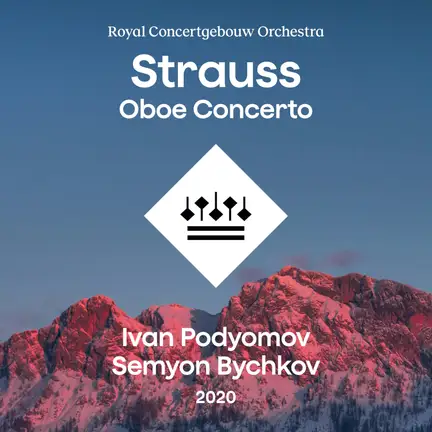
The Oboe Concerto in D major (TrV 292, AV 144) is widely considered one of the greatest masterpieces and core repertoire pieces ever written for the instrument. Composed in 1945 during the twilight of his life—a period often called his musical “Indian summer”—the concerto stands out for its light, pastoral, and neoclassically joyous character, sharply contrasting with the devastation of World War II surrounding him. The concerto follows a traditional Classical fast-slow-fast structural model across three interconnected movements, lasting roughly 25 minutes in total:
I. Allegro moderato (D major): Opens with a gentle rhythm in the cellos, immediately followed by a famously demanding, unbroken solo line for the oboe that stretches over fifty measures. II. Andante (B-flat major / D major): An elegant, lyrical, and elegiac movement reminiscent of the introspective moods in his late operas. III. Vivace – Allegro (D major): A bright, playful, and rhythmically complex finale that echoes the witty charm of some of his earlier work.
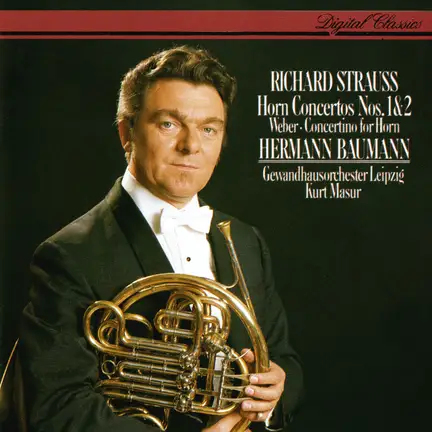
Horn Concerto No. 1 in E-flat major, Op. 11, composed in 1883, is one of the most celebrated and frequently performed works in the entire French horn repertoire. Created under the heavy influence of his father, Franz Strauss (the principal horn player of the Munich Court Opera), the work beautifully fuses the classical clarity of Mozart with early Romantic heroism. While it is structured in three distinct movements, the first two are connected by a seamless musical bridge (attacca): I. Allegro: Opens immediately with a striking, heroic fanfare from the solo horn, leading into a movement filled with bold dramatic tension and long lyrical phrases. II. Andante: A deeply expressive, soft-grained, and melancholic movement in a minor key that highlights the vocal, singing qualities of the instrument. III. Rondo (Allegro molto): A lively, virtuosic finale packed with rhythmic vitality, high-energy arpeggios, and playful hunting calls.
Horn Concerto No. 2 in E-flat major, TrV 283, is a prominent three-movement concerto for solo horn and orchestra composed in 1942. Written nearly 60 years after his first horn concerto, this late-period masterpiece is celebrated as one of the most demanding yet frequently performed horn concertos of the 20th century. The music is remarkably light, carefree, and nostalgic. Follows a traditional fast-slow-fast classical architecture: I. Allegro (E-flat major): Opens with an energetic, declamatory fanfare from the solo horn, leading into a fluid, lyrical movement that seamlessly blends late-Romantic warmth with neoclassical restraint. II. Andante con moto (A-flat major): A deeply poignant, song-like movement that showcases the horn’s capacity for expressive, singing melodies. III. Rondo: Allegro molto (E-flat major): A playful, witty, and highly virtuosic finale requiring extraordinary agility, rapid tongue execution, and exceptional breath control from the soloist.
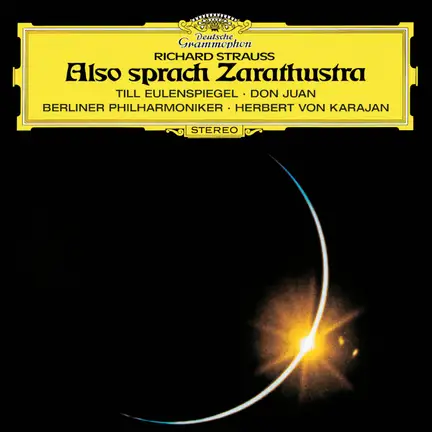
Also sprach Zarathustra, Op. 30 (translated as Thus Spoke Zarathustra) is a monumental tone poem composed in 1896. Based on Nietzsche’s novel of the same name, the work explores the structural conflicts of human mortality and nature. It is widely celebrated for its thrilling opening movement, a feature in Stanley Kubrick’s iconic 1968 film, 2001: A Space Odyssey. The work is scored for a massive orchestra and is divided into nine distinct sections after specific chapters from Nietzsche’s text played with only three brief pauses. Einleitung (Introduction / Sunrise): The famous, thunderous opening brass fanfare. Von den Hinterweltlern (Of the Backworldsmen): Represents early humanity turning to religion for meaning. Von der großen Sehnsucht (Of the Great Longing): Explores passion, desire, and the human soul. Von den Freuden und Leidenschaften (Of Joys and Passions): A section driven by intense string melodies. Das Grablied (The Song of the Grave): A sombre, shifting transitional movement. Von der Wissenschaft (Of Science and Learning): A complex chromatic fugue that uses all twelve notes of the scale, gently mocking strict scientific positivism. Der Genesende (The Convalescent): Dramatic orchestral build-up signifying an existential breakthrough. Das Tanzlied (The Dance Song): A joyful, soaring Viennese waltz featuring a prominent solo violin. Nachtwandlerlied (Song of the Night Wanderer): The quiet coda that leaves the piece unresolved. Don Juan, Op. 20, is a landmark orchestral tone poem which serves as a musical retelling of the Nikolaus Lenau’s poem which reframes the legendary libertine as a romantic idealist. Its premiere established Strauss as a leading modernist composer of his generation. The piece launches instantly with an explosive, upward-swooping theme, capturing Don Juan’s wild abandon and insatiable energy. As the piece progresses, the music shifts into deeply lyrical episodes representing different romantic encounters. Notable highlights include a tender solo violin melody and a famously long, expressive oboe. Following a moment of stillness, the brass section erupts into a famous, triumphant four-horn theme that showcases Don Juan’s pride and renewed determination. Rather than concluding with a grand finale, the piece spirals into sudden dissonance and deathly quiet. A chilling blast from the trumpets paired with a cold, descending orchestral fade illustrates Don Juan’s final, gasping breath as his fuel is consumed. “Dance of the Seven Veils” is the most famous instrumental sequence from his groundbreaking 1905 opera Salome. Underneath its Middle Eastern textures, the piece functions musically as a dark, distorted waltz. This stylistic choice reflects the corruption and decay of Herod’s court. Earlier music themes weave throughout the dance. The music mirrors Salome’s internal conflict: her shuddering disgust for Herod juxtaposed with her intense, psychotic yearning for John.
Till Eulenspiegels lustige Streiche (Till Eulenspiegel’s Merry Pranks), Op. 28, TrV 171 is a celebrated tone poem composed between 1894 and 1895. The single-movement orchestral masterpiece chronicles the misadventures, scams, and ultimate demise of Till Eulenspiegel, a legendary, irreverent rogue from German folklore. The work opens with a gentle “once upon a time” theme in the strings, setting a storybook atmosphere. There are two primary motifs for Till. The first is a famous, technically demanding horn call. The second is an erratic, laughing phrase played by the D clarinet. The music vividly details Till’s pranks until eventually captured then grim brass chords represent the judges, while the D clarinet squeaks in terrified defiance until he is hanged. The Epilogue: The “once upon a time” theme returns, wrapping up the story. However, Till’s musical motif gets the final, whistling laugh, suggesting his rebellious spirit cannot truly be killed.
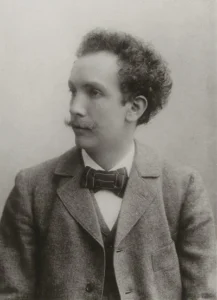
Richard Georg Strauss (1864 –1949) was a German composer and conductor known for his tone poems and operas. A leading figure of the late Romantic and early Modern era, and a successor to Richard Wagner and Franz Liszt, he combined, along with his friend Gustav Mahler, subtleties of orchestration with an advanced harmonic style.
Strauss was born on 11 June 1864 in Munich, the son of Josephine and Franz Strauss, who was the principal horn player at the Court Opera in Munich and a professor at the Königliche Musikschule. His mother was the daughter of Georg Pschorr, a financially prosperous brewer from Munich. A child prodigy in composition, Strauss began his musical studies at the age of four, studying piano with August Tombo who was the harpist in the Munich Court Orchestra. He wrote his first composition at the age of six. In 1872, he started receiving violin instruction from Benno Walter, the director of the Munich Court Orchestra and his father’s cousin, and at 11 began five years of compositional study with Friedrich Wilhelm Meyer. In 1882 he graduated from the Ludwigsgymnasium and afterwards attended only one year at the Ludwig-Maximilians-Universität München in 1882–1883. In addition to his formal teachers, Strauss was profoundly influenced musically by his father who made instrumental music-making central to the Strauss home. Strauss’s father taught his son the music of Beethoven, Haydn, Mozart, and Schubert. His father further assisted his son with his musical composition during the 1870s and into the early 1880s, providing advice, comments, and criticisms. His father undoubtedly had a crucial influence on his son’s developing taste, not least in Strauss’s abiding love for the horn. His Horn Concerto No. 1 is representative of this period and is a staple of the modern horn repertoire. In early 1882, in Vienna, Strauss gave the first performance of his Violin Concerto in D minor, playing a piano reduction of the orchestral part himself, with his teacher Benno Walter as soloist. He left a year later to go to Berlin, where he studied briefly before securing a post with the Meiningen Court Orchestra as assistant conductor to Hans von Bülow, who had been enormously impressed by the young composer’s Serenade (Op. 7) for wind instruments, composed when he was only 16 years of age. Strauss learned the art of conducting by observing Bülow in rehearsal.
Brahms’ music, like Wagner’s, also left a tremendous impression upon Strauss, and he often referred to this time of his life as his ‘Brahmsschwärmerei’ (‘Brahms adoration’) during which several his compositions clearly show Brahms’ influence, including the Piano Quartet in C minor, Op. 13 (1883–84), Wandrers Sturmlied (1884) and Burleske (1885–86). Strauss met the composer Alexander Ritter who was a violinist in the Meiningen orchestra, Ritter had a tremendous impact on the trajectory of Strauss’s work as a composer from 1885 onward. Ritter convinced Strauss to abandon his more conservative style of composing and embrace the “music of the future” by modelling his compositional style on Wagner and Liszt.All of this together gave a new aesthetic anchor to Strauss which first became evident in his embrace of the tone poem genre. In 1886, after leaving his post in Meiningen, Strauss spent several weeks traveling throughout Italy before assuming a new post as third conductor at the Bavarian State Opera. Strauss’s tenure at the Bavarian State Opera was not a happy one. In May 1889, Strauss left his post with the Bavarian State Opera after being appointed Kapellmeister to Charles Alexander, Grand Duke of Saxe-Weimar-Eisenach in Weimar, beginning in the autumn of 1889. During the summer of 1889 as the assistant conductor of the Bayreuth Festival he befriended Cosima Wagner who became a long-term close friend.
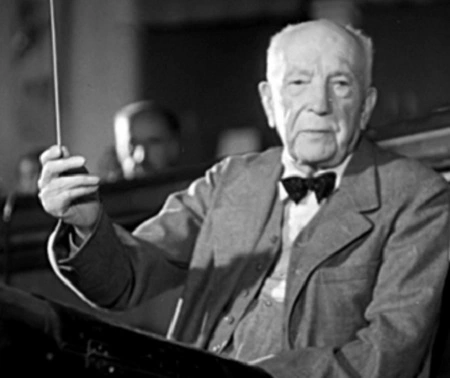
one of the greatest of all composers for the human voice, a man who lived through the Third Reich and two world wars, and whose gorgeously expressive music helped create one of cinema’s most famous moments.. He dominated classical music at the turn of the 20th century with a series of works that pushed post-Romanticism to extremes and pre-empted the innovations of modernism
The soprano, Pauline De Ahna went with Strauss to Weimar and he later married her on 10 September 1894. She was a great source of inspiration to him. Throughout his life, from his earliest songs to the final Four Last Songs of 1948, he preferred the soprano voice to all others, and all his operas contain important soprano roles. Strauss’s first opera, Guntram, in 1894 was received with mixed reviews and was Strauss’s first major failure. However, Strauss’s tenure in Weimar brought about several important successes for his career. His tone poem Don Juan premiered in 1889 to tremendous critical response, and the work quickly brought him international fame and success. This was followed by another lauded achievement, Death and Transfiguration in 1890. Both of these works, along with the earlier Burleske, became internationally known and established him as a leading modernist composer. He also had much success as a conductor in Weimar. Strauss left his post in Weimar when he was appointed first conductor, of the Bavarian State Opera where he became responsible for the operas of Wagner. While working in Munich for the next four years he had his largest creative period of tone poem composition, producing Till Eulenspiegel’s Merry Pranks (1895), Also sprach Zarathustra (1896), Don Quixote (1897), and Ein Heldenleben (1898). He also served as principal conductor of the Berlin Philharmonic in 1894–1895. In 1897, the Strausses’ only child, their son Franz, was born. Strauss left the Bavarian State Opera in 1898 when he became principal conductor of the Staatskapelle Berlin at the Berlin State Opera in the fall of 1898; a position he remained in for 15 years. By this time in his career, he was in constant demand as a guest conductor internationally and enjoyed celebrity status as a conductor. In 1904 Strauss embarked on his first North American tour. During this trip he was working intensively on composing his third opera, Salome, based on Oscar Wilde’s 1891 play Salomé. The work, which premiered in Dresden in 1905, became Strauss’s greatest triumph in his career up to that point. After Salome, Strauss had a string of critically successful operas which he created with the librettist and poet Hugo von Hofmannsthal. His opera Der Rosenkavalier is generally considered his finest achievement. from 1919 to 1924 he was principal conductor of the Vienna State Opera. In March 1933, when Strauss was 68, Adolf Hitler rose to power. Strauss never joined the Nazi party; however, he was initially drawn into cooperating with the early Nazi regime in the hope that Hitler—an ardent Wagnerian and music lover who had admired Strauss’s work since viewing Salome in 1907—would promote German art and culture. In addition, he had a determination to preserve and conduct the music of banned composers such as Gustav Mahler and Claude Debussy, Strauss’s need to protect his Jewish daughter-in-law and Jewish grandchildren also motivated his behaviour. Strauss completed the composition of Metamorphosen, a work for 23 solo strings, in 1945. The title and inspiration from a poem by Goethe. Generally regarded as one of the masterpieces of the string repertoire, Metamorphosen contains Strauss’s most sustained outpouring of tragic emotion. Strauss had a late creative upsurge from 1942 to the end of his life. The major works written in his late 70s and 80s, include, among others, his Horn Concerto No. 2, Metamorphosen, his Oboe Concerto, his Duet concertino for clarinet and bassoon, and his Four Last Songs. At the end of the war Strauss’s bank accounts were frozen, and many of his assets seized by American forces. Short of money, in 1947 Strauss embarked on his last international tour, a three-week trip to London. The trip was a critical success and provided him and his wife with some much-needed money. From May to September 1948, just before his death, Strauss composed the Four Last Songs, which dealt with the subject of dying. In December 1948, Strauss was hospitalized for several weeks after undergoing bladder surgery. His health rapidly deteriorated after that. On 15 August, 1949 he suffered a heart attack and he quietly died of kidney failure in his sleep
Sound quality is important and the better online Streaming services will offer superior sound quality. As always, We do encourage you to purchase Favoured albums from good online or High street record stores.
Artists in upcoming issues: Jean Sibelius, franz Liszt, peter Maxwell davies……Keep Listening!! JOIN THE CONVERSATION…