In This issue #21 we highlight 4 artists and some significant works
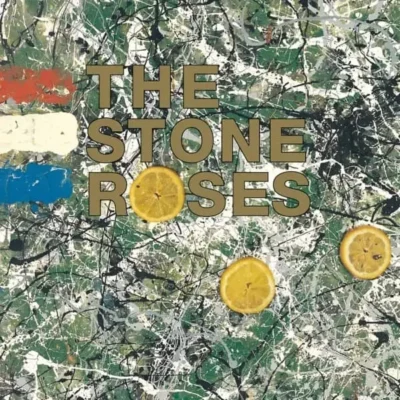
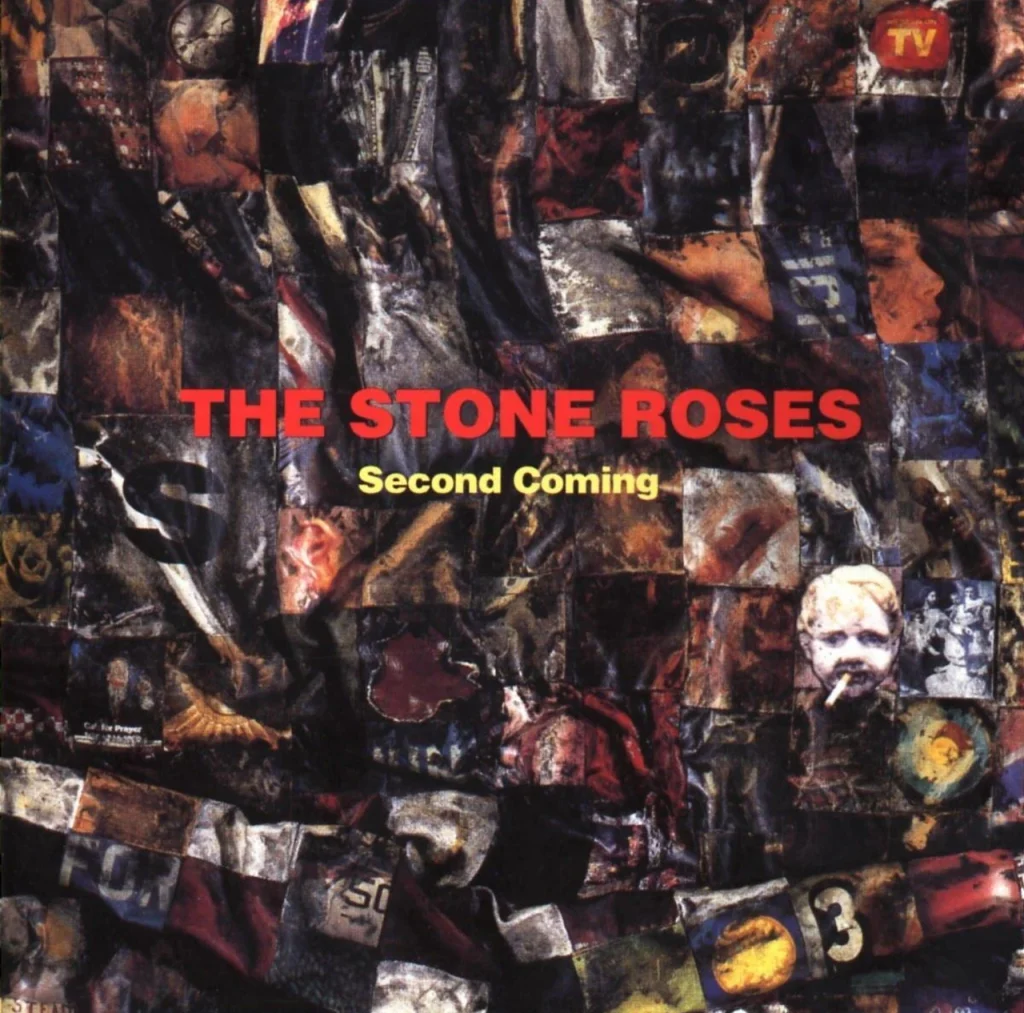
the Stone Roses released in May 1989 is widely celebrated as a landmark British debut album. Produced by John Leckie, it brilliantly fused 1960s jangle-pop and neo-psychedelia with the emerging Manchester acid-house dance culture, anchoring the “Madchester” movement and paving the way for Britpop. Drummer Reni and bassist Mani provided a fluid, dance-inflected backbone. Reni’s intricate shuffle beats and Mani’s melodic basslines (such as on “I Wanna Be Adored”) gave the tracks an infectious groove without sounding like conventional disco or rock. John Squire combined 60s-style chiming counterpoint melodies with psychedelic, echo-laden effects, creating a bright and expansive template for 90s guitar bands. Frontman Ian Brown delivered casual, charismatic, and divisive vocals. While his pitch was occasionally loose, his supreme confidence and swagger (“I am the resurrection and the light”) defined the attitude of a generation. Key Tracks: “I Wanna Be Adored”: A hypnotic opener featuring a slow-creeping bassline and layered, atmospheric guitar waves. “She Bangs the Drums”: An upbeat, sunny rush of jangle-pop driven by an unforgettable bass and drum interplay. “Made of Stone”: A moody, tension-filled classic that showcases the delicate balance between Squire’s acoustic-electric guitar work and Brown’s internal reflection. “I Am the Resurrection”: The ultimate closer, shifting from punchy pop verses into a euphoric, extended multi-style guitar jam session that refuses to drag despite its length. Second Coming is the second and final studio album by the legendary Manchester rock band released in December 1994 through Geffen Records. Arriving a staggering five and a half years after their groundbreaking 1989 self-titled debut, the album faced near-impossible levels of anticipation, a changing musical landscape, and intense internal friction. Despite a divisive reception, it achieved commercial success. The album leans away from the hazy indie-pop of their debut, opting for extended jam sessions and intricate, heavy guitar riffs: “Breaking Into Heaven” – An 11-minute track starting with four minutes of swampy, tribal atmospheric noises. “Driving South” – A blues-driven track anchored by heavy guitar work. “Ten Storey Love Song” – Echoing their older, melodic psychedelic-pop sound. “Daybreak” – A funk-infused rock workout written by the full band. “Your Star Will Shine” – A minimalist, campfire-style acoustic song reflecting their rural recording environment. “Straight to the Man” – A loose, groovy track penned by lead singer Ian Brown. “Begging You” – An aggressive, singular collision of techno-beats and heavy rock guitars. “Tightrope” – A quiet acoustic track featuring distinctive band harmonies. “Good Times” – An extended, bluesy hard-rock jam. “Tears” – A dramatic, building rock epic. “How Do You Sleep” – A spiteful, biting mid-tempo track. “Love Spreads” – The album’s lead single, featuring a blistering slide-guitar intro and Ian Brown’s trademark swagger. It became the band’s highest-charting single..
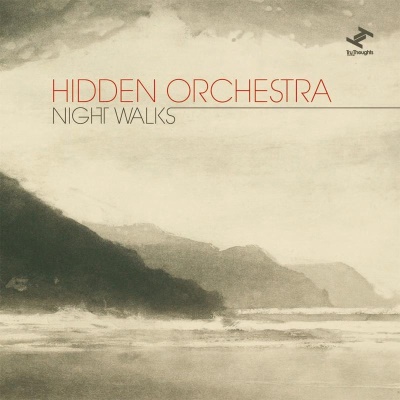
Released in September 2010 on Tru Thoughts, Night Walks is widely praised as a mesmerizing, cinematic fusion of jazz, electronica, classical instrumentation, and atmospheric field recordings. Critics celebrate its intricate, multi-layered percussion and timeless, immersive mood. Members: Joe Acheson (double bass, bass guitar, samples), Poppy Ackroyd (keyboards, violin, viola), Tim Lane (drums, trombone, percussion), Jamie Graham (drums, percussion). Combines nu-jazz, ambient electronica, trip-hop, and classical arrangements. Features dual drummers, upright bass, piano, and guest strings or horns. Uses natural sounds like rain and footsteps to build a vivid, nocturnal atmosphere. Reviewers highlight the album’s deep cohesion, calling it a masterclass in tone and rhythm that rewards attentive listening.
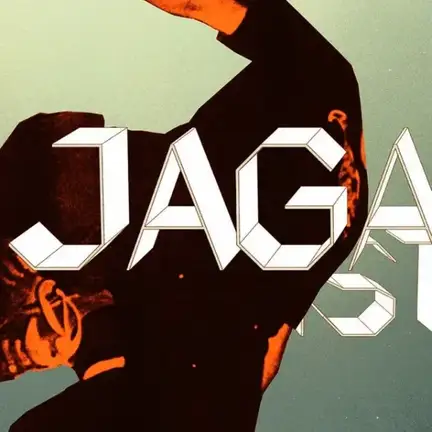
A Livingroom Hush remains perhaps the most definitive Jaga Jazzist album. A complex blend of post-rock, nu-jazz, IDM, psychedelia, and progressive rock. Representing a landmark fusion of electronic music and avant-garde jazz. Features ten instrumental songs, predominantly composed by principal members Lars Horntveth and Jørgen Munkeby. A massive acoustic-electronic arsenal including saxophones, trumpets, trombone, tuba, vibraphone, double bass, Fender Rhodes, and synthesizers. Key tracks include Animal Chin – The energetic opener driven by swirling flute, vibraphone patterns, and lurching breakbeats. Going Down – A track featuring luminous, “Cool School” horn arrangements reminiscent of Gil Evans. Airborne – Showcases inspired riffing layered behind Lars Horntveth’s tenor saxophone. Real Racecars Have Doors – Built on prog-rock squelches and tightly wound rhythms. Cinematic – A sprawling, atmospheric conclusion to the record.
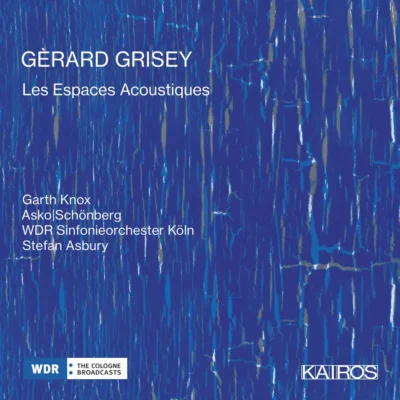
Les Espaces Acoustiques (Acoustic Spaces) is a monumental cycle of six pieces composed by Gérard Grisey between 1974 and 1985, widely recognized as the defining masterpiece of spectral music. The entire cycle functions like a musical macro-organism, expanding from a single solo instrument into a massive orchestra. Each piece is designed to be performed either individually or sequentially without interruption, transforming the acoustic space as the ensemble grows. The six movements expand step-by-step in instrumentation and acoustic volume: Prologue (1976): For solo viola. It introduces the foundational acoustic material and harmonic spectrum. Périodes (1974): For seven instruments (flute, clarinet, trombone, violin, viola, cello, and double bass). Partiels (1975): For 16 or 18 instruments. This is the most famous movement, famously recreating the acoustic “sonic footprint” and upper partials of a low trombone breath. Modulations (1978): For an orchestra of 33 musicians, shifting the focus to smooth transformations and transitions of sound textures. Transitoires (1980): For full orchestra, mastering the macro-scale transitions of spectral harmonies. Épiphany (1984–1985): For large orchestra and four solo brass instruments placed around the audience, completely enveloping the physical space. Sound physically expands from a central point on stage to completely surround the listening audience by the final movement.
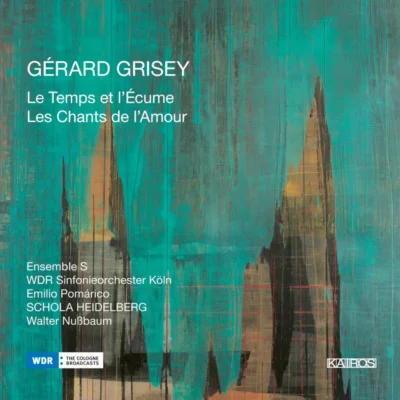
.Le Temps et l’Écume (1988–1989) is a major masterwork of spectral music. Scored for four percussionists, two synthesizers, and chamber orchestra, it is a profound sonic exploration of how humans perceive the passage of time. Grisey structures the piece by alternating and blending three zoological and physical metaphors of time: Whales’ Time: A heavily stretched, slow-moving temporality. It mimics deep-sea sleep rhythms, utilizing low frequencies and dilated, static spectral harmonies. Humans’ Time: The standard scale of human speech, gesture, and respiration. It serves as the baseline psychological anchor for the listener. Birds’ or Insects’ Time: An extremely compressed, hyper-accelerated timeline. It consists of rapid, flurrying instrumental figures where individual shapes and contours blur into a continuous texture.
Les Chants de l’Amour (1982–1984) is a seminal contemporary classical masterpiece by the French pioneer of spectral music. Written for 12 mixed solo voices and computer-generated tape, the piece lasts roughly 35 minutes and is widely considered one of the most significant vocal works of the late 20th century. The pre-recorded electronic tape acts as a “thirteenth synthetic voice” that surrounds the 12 singers like a continuous, breathing drone. The singers perform a patchwork of onomatopoeias, phonetic sounds, and names of famous historical lovers. The word “love” is uttered and woven together in over ten different languages. The music transcends conventional choral singing by utilising chattering, rhythmic breathing, microtonal inflections, and stage directions that create a highly dramatic, almost ritualistic environment. Vortex Temporum (1994–1996) is a masterwork of late 20th-century classical music. Written for a sextet consisting of flute, clarinet, violin, viola, cello, and piano, it is widely considered one of Grisey’s most satisfying and historically significant work. Split into three movements that flow seamlessly through these altered perceptions of time: Movement I: A breathless, virtuosic section characterized by swirling, rapid rotations and a commanding piano solo. Movement II: A stark deceleration into an unwinding, meditative chorale. Time expands, forcing the listener to zoom into the microscopic texture of slowly shifting frequencies. Movement III: A cumulative, hybrid finale where elements from the first two movements collide, layer, and spiral out into a dizzying acoustic threshold.
in further issues we will continue to Bring you the music of Popular genres to listen, review and evaluate. issue #22 (coming soon) features My chemical Romance, Stars of the Lid, evan parker and Karl Jenkins
NOTES
Gérard Grisey – Les Espaces acoustiques ; Le Temps et l’Écume – Label Kairos
vortex temporum – Label Stradivarius
hidden Orchestra – night walks – Label : Tru Thoughts records
jaga jazzist – a livingroom Hush – label : ninja tune
the stone roses – The stone Roses – Label : Silvertone ; second Coming – label : Geffen
It is helpful to research the artist, using sources like Wikipedia , Music Magazine Reviews (Pitchfork, Rolling stone, NME etc.,) Artist Websites, etc…
A synopsis of the life and music of this Issue’s featured artists appears below.
This Week’s Artists
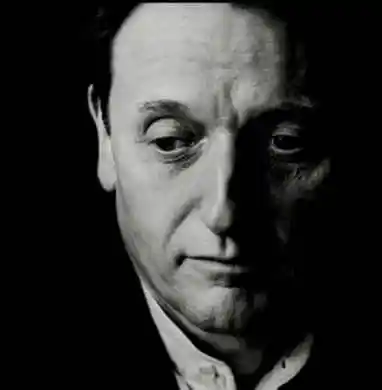
Though he is by turns cast as the latest composer in the French colouristic tradition, or as the heir to Boulez in radically rethinking musical composition from the foundations up, perhaps what is most notable about Grisey is the humanness of his art and the seriousness of his vocation. Rejecting static, architectural structures, Grisey viewed sounds as “living objects with a birth, lifetime and death.” His scores captured continuous, organic transitions—gradually warping acoustic spaces from pure harmonic overtones to dense, complex noise
Gérard Henri Grisey
Gérard Henri Grisey (1946 –1998) was a twentieth-century French composer of contemporary classical music. His work is often associated with spectral music, of which he was a major pioneer. Grisey was born in Belfort, France in 1946. From a very young age, Grisey demonstrated enormous interest and talent in music composition and study, writing his first essay on music when he was 9 years old. His first instrument was the accordion, which he received as a Christmas present aged 5. He was very proficient on the instrument, twice winning first prize at the French national championship and competing in the accordion World Cup. He studied at the conservatory in Trossingen, West Germany, from 1963 to 1965. There he took classes in accordion, as well as harmony, fugue, and counterpoint, before going on to the Conservatoire de Paris, where he studied with Olivier Messiaen from 1965 to 1967 and again from 1968 to 1972, while also working with Henri Dutilleux at the École normale de musique in 1968. He won prizes for piano accompaniment, harmony, counterpoint, fugue, and composition at the Conservatoire under Messiaen’s guidance. He also studied electroacoustics with Jean-Étienne Marie in 1969, composition with Karlheinz Stockhausen, Iannis Xenakis and György Ligeti at the Darmstädter Ferienkurse in 1972, and acoustics with Émile Leipp at the Faculté des Sciences in 1974. Other studies were undertaken in the summer of 1969 at the Accademia Chigiana in Siena, Italy. Grisey won the Prix de Rome, enabling him to stay at the Villa Medici in Rome from 1972 to 1974. While there he became friends with Tristan Murail, with whom he founded the group L’Itinéraire in 1973 along with Roger Tessier and Michaël Lévinas, later to be joined by Hugues Dufourt.
In 1974–75, he studied acoustics with Émile Leipp at the Paris VI University, and in 1980 became a trainee at IRCAM in the computer music course organized by David Wessel and Marc Battier. During the same year, Grisey went to Berlin as a guest of the D.A.A.D. (Berliner Künstlerprogramm des DAAD) program. He subsequently left for the University of California, Berkeley, where he was appointed professor of theory and composition for the years 1982 to 1986. After returning to Europe, he took up the role of professor of orchestration and composition at the Conservatoire de Paris from 1987 until his death, while also holding numerous composition seminars in France and abroad. In the 1980s, as Grisey’s ideas spread outside France – owing in part to his teaching at the Darmstadt Summer Courses in 1980 and 1982 – he continued to develop his style. Where early works such as Périodes are based on slow-moving processes, later works like Talea (1986) blend multiple layers of time, evoking the distinct rhythms of whales, humans, and insects. Grisey retained from his early faith a tendency to the mystical, and he often couched his music in images of death. This culminated with the song cycle Quatre chants pout franchir le seuil (‘Four Songs for Crossing the Threshold’), commissioned and premiered by the London Sinfonietta; though at the 1999 world premiere in London, conducted by Grisey’s friend George Benjamin, Grisey was sadly absent: soon after finishing this death-focused work, he died suddenly of an aneurysm. Grisey died at the age of 52 in Paris on 11 November 1998.
Grisey’s music is often considered to belong to the genre of spectral music, which he is credited with founding along with fellow composer Tristan Murail, although he later disowned the label in interviews and writings. According to British journalist Tom Service, “His achievement has often been reduced to yet another of new music’s fetishistic labels, ‘spectralism’ – a category that Grisey had rejected by the end of his life.” He focused on slow changes in sound texture. He used the inner acoustic building blocks of notes—the harmonic overtones—to shape his pieces, treating sound like a physical material. He mixed pure musical tones with rough noise. His pieces take time to shift and grow. He used the natural overtones found inside individual notes. Music is built by looking closely at sound waves. Notes are treated as physical objects you can touch and hear.
Masterpieces of Spectral Music – Les Espaces Acoustiques (1974–1985): A massive, six-movement cycle (including famous inner sections like Partiels and Périodes) that scales a single viola tone up into a roaring orchestra and back down again. Vortex Temporum (1996): A breathtaking late chamber piece that plays with three different speeds of human time, mixing cascading piano runs with delicate wind and string textures. Quatre chants pour franchir le seuil (1997–1998): Grisey’s profound final vocal masterpiece, exploring death and the passage from life with stunning emotional clarity. Le Temps et l’Écume (1988–1989): A thrilling, cosmic orchestral work featuring synthesizers and restless percussion that shifts like ocean waves
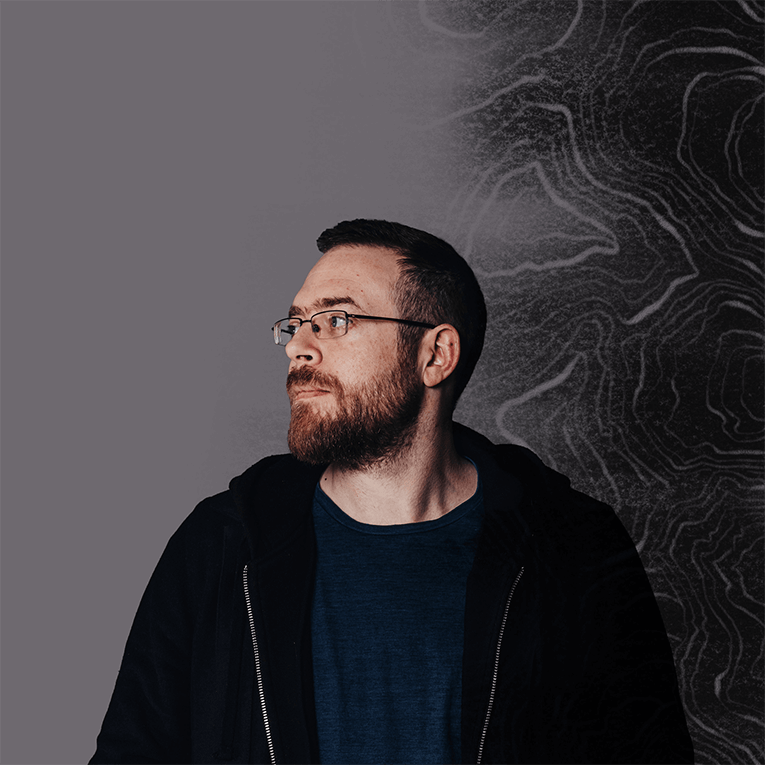
Hidden Orchestra is an imagined orchestra created by multi-instrumentalist composer/producer Joe Acheson. Currently based in Stroud (UK). The releases feature a wide variety of guest musicians from different musical backgrounds, recorded separately, and combined by Joe in his studio to create an ‘imaginary orchestra’ that doesn’t really exist. Dark orchestral textures, with field recordings, bass, and intricate layers of drums and percussion.
Hidden Orchestra
Hidden Orchestra is the solo studio project of Joe Acheson – a composer, producer, multi-instrumentalist, sound artist, remixer and documentary-maker, who has musically collaborated with The British Library, National Trust, BBC, Eden Project, Kew Gardens, Saatchi Gallery, Sydney Botanical Gardens and many more. Hidden Orchestra creates an imaginary orchestra compiled from individual recordings of a diverse array of musicians and found sounds, often writing short solo and chamber pieces entirely for the purpose of sampling them. He uses production techniques from sample-based music to compose Electronic/Classical music, acoustic instruments, and real-world sounds (from rain and birdsong through to industrial and mechanical noises). His live shows are an immersive, upbeat, exciting experience. His albums and live shows include guest musicians from diverse musical backgrounds. Formed in Edinburgh, the band’s regular live members include Poppy Ackroyd and drummers Tim Lane and Jamie Graham. Acheson records musicians individually, then combines the recordings in a studio as though the musicians were part of an orchestra. He uses field recordings, bass, drums, and percussion. Hidden Orchestra’s debut album Night Walks was released in September 2010 by Tru Thoughts. It mixed elements of jazz, classical music, drum and bass, rock and hip hop. Natural sounds are combined with electronic effects. BBC Radio 1 chose Night Walks as Album of the Month.
In January 2011 a vinyl deluxe version was published by Denovali. The album Archipelago borrowed from Sufi music, modal jazz, progressive rock, and the sounds of birds and the wind. Popularity of the album resulted in two albums of remixes. Hidden Orchestra composed the soundtrack for Creaks, a video game developed by Czech studio Amanita Design, which was released in July 2020.
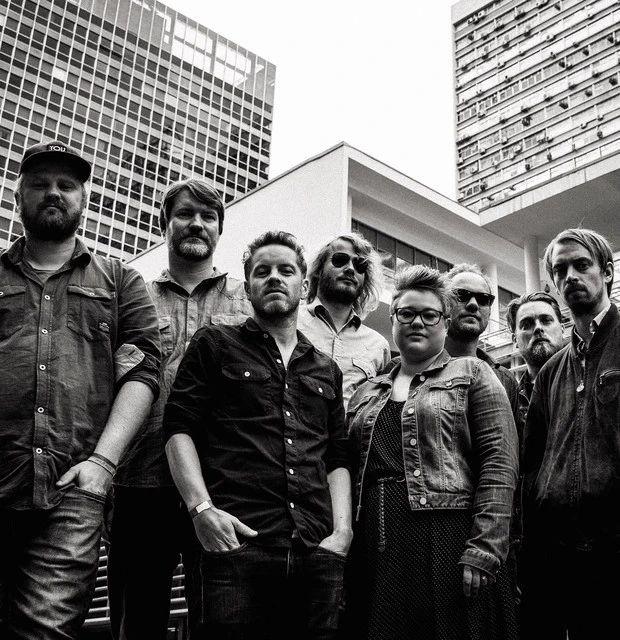
Jaga Jazzist is an acclaimed Norwegian experimental jazz fusion multi-instrumental band formed in Tønsberg, Norway in 1994. Renowned for their genre-bending compositions, they seamlessly blend progressive jazz with electronica, post-rock, hip-hop, and classical instrumentation.
jaga jazzist
Jaga Jazzist (also known as Jaga) is a Norwegian jazz fusion band. Their second album, A Livingroom Hush, was named the best jazz album of 2002 by the BBC. The core of the band are the brothers and the main songwriters, Lars and Martin Horntveth. Martin formed Jaga Jazzist together with Ivar Christian Johansen in 1994 while they still were in their teens, though Johansen later left the group. Jaga Jazzist nearly created a sensation with their debut album, Jævla Jazzist Grete Stitz (1996), that contained playful, humorous jazz with elements of rap. The very young Lars Horntveth became increasingly involved in composing the music they played. After Magazine word spread about their fresh musical expressions and energetic live shows, and the band toured extensively before they signed a recording contract with Warner Music of Norway in 2000. The highly anticipated debut album for Warner, A Livingroom Hush, was released in 2001 and consists of a melodic and energetic mix of lounge jazz, cinematic themes and instrumental rock. The producer Jørgen Træen played an important role during the recording, and left his mark on the disc with his crackling electronics. Jaga Jazzist is widely considered to be one of the premier acts of the so-called nu-jazz movement of Scandinavia. In May 2013, Jaga Jazzist collaborated with the Britten Sinfonia to release Live with Britten Sinfonia on Ninja Tune, to a positive critical reception. The Stix is the third studio album by the Norwegian band Jaga Jazzist. It was released on May 2003 by Ninja Tune to positive reviews. The album is highly regarded for its forward-thinking fusion of acoustic big band textures with intricate digital production, encompassing genres like future jazz, IDM (Intelligent dance music), post-rock, drum ‘n’ bass, and glitch that turns audio errors, like CD skips, software crashes, and hardware noise, into musical patterns.
What We Must is the fourth studio album by the Norwegian band Jaga Jazzist. It was released April 2005 by Ninja TuneJaga. The album marked a major stylistic departure for the multi-member collective. While their earlier, breakthrough records like A Livingroom Hush leaned heavily into electronic-laden nu-jazz, What We Must pivotally integrated heavy post-rock, shoegaze textures, and cinematic rock orchestration. One-Armed Bandit is the fifth studio album by the Norwegian band Jaga Jazzist. It was released January, 2010 by Ninja Tune to positive reviews. Compared to their earlier work, it features a substantial progressive rock influence. Moving away from the conventional jazz structures of their earlier catalogue, the album serves as a landmark release for the group, embracing a massive, maximalist progressive rock and electronic fusion sound. Jazzist released their album Starfire in 2015 on Ninja Tune. The album marks a definitive shift toward a more hard-edged, heavily layered, and studio-dominated electronic sound compared to their earlier, more acoustic big-band jazz structures. The record is highly cinematic and massive in scope, consisting of just five expansive tracks that stretch between 6 and 14 minutes long, spanning roughly 50 minutes total. Pyramid is the acclaimed ninth studio album released August 2020 through Flying Lotus’s avant-garde record label, Brainfeeder. The album marks a monumental moment in the band’s history, as it was entirely self-produced and recorded in just two intense weeks in the secluded woods of Norway. Musically, it seamlessly fuses a deep love for 1970s jazz-rock, post-rock, cosmic psychedelia, and modern electronica. Pyramid consists of four sprawling, multi-part compositions that function as continuous movements: Tomita (13:47): A beautiful homage to Japanese electronic music pioneer Isao Tomita, weaving vintage synthesizers into intricate jazz rhythms. Spiral Era (08:09): A propulsive, melody-driven piece driven by tight basslines and sparkling horn arrangements. The Shrine (09:06): Inspired by Fela Kuti’s legendary Lagos club, this track anchors down into Afrobeat-inflected rhythms blended with heavy, dark electronic tones. Apex (08:09): A thrilling, high-energy progressive rock finale that pushes the band’s sonic wall to its highest peaks
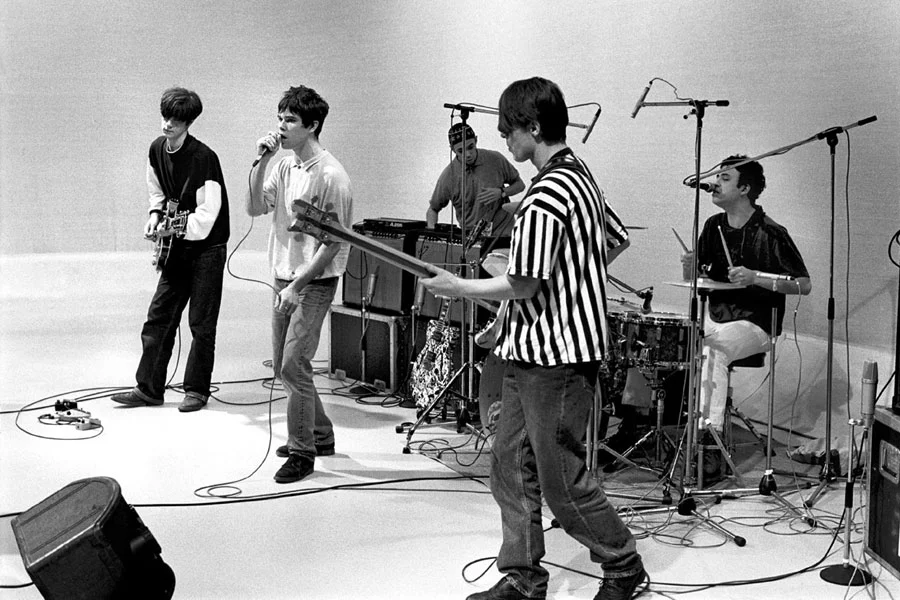
Stone Roses were an English rock band formed in Manchester in 1983. They were one of the pioneering groups of the Madchester movement in the late 1980s and early 1990s. The band’s classic and most prominent lineup consisted of the vocalist Ian Brown, the guitarist John Squire, the bassist Gary “Mani” Mounfield and the drummer Alan “Reni” Wren.
stone roses
In 1985, long before they were famous, Ian Brown and drummer Reni gained local notoriety in Manchester by spray-painting the band’s name across city-centre buildings to generate hype. In November 1989, performing live on the The Late Show the studio’s power failed due to a noise limiter trigger. Instead of stopping quietly, frontman Ian Brown began pacing the stage, repeatedly shouting “Amateurs!” at presenter Tracey MacLeod. In 1990, furious over their former label FM Revolver re-releasing the single “Sally Cinnamon” without their permission, the band stormed the label’s Wolverhampton offices. They trashed the premises and threw blue and white paint over the label boss, his staff, and their cars. The stunt resulted in the band being arrested and fined thousands of pounds. They spent years entangled in a bitter legal dispute to escape their contract with Silvertone Records, halting their momentum at their absolute peak. In May 1990, the band held an iconic, self-organized outdoor concert at Spike Island in Cheshire for 27,000 fans. The gig achieved legendary status but was plagued by terrible sound quality. Despite the chaos, it became a cultural touchstone that inspired a generation of subsequent musicians. The Stone Roses were notoriously difficult for journalists to interview. They routinely gave monosyllabic, silent, or openly hostile interviews. They rejected traditional music industry networking and the standard London-centric press machine, radiating a detached, unbothered Manchester confidence that terrified television executives but deeply endeared them to their working-class fanbase.
The Stone Roses released their eponymous debut album in 1989. Stone Roses is now considered one of the greatest British albums, although the band themselves were unhappy with the sound on the album, Squire describing it as “twee” and not “fat or hard enough”. It was a breakthrough success, being critically acclaimed and regarded by many as one of the greatest British albums. More success followed with the release of “Fools Gold” a standalone single that perfectly bridged indie rock and dance music, reaching iconic status on dance floors worldwide. Following these successes, the band sought to capitalise on their newfound fame by signing with a major label. Silvertone slapped an injunction on the group, legally preventing them from recording new music for anyone else while court proceedings dragged on. They later signed a major deal with Geffen Records, but the protracted legal war cost them years of momentum before they finally released their second album. The Stone Roses released their second album, Second Coming, in 1994. It received mixed reviews. The group soon disbanded after several lineup changes throughout the supporting tour, which began with Reni departing in March 1995, followed by Squire in April 1996. Brown and Mani dissolved the remains of the group in October 1996 following their appearance at the Reading Festival. Brown, Squire and Mani had successful careers since the Roses’ breakup. Following much media speculation, the Stone Roses announced their reunion on 18 October 2011 and embarked on a world tour in 2012, including three homecoming shows in Heaton Park, Manchester. Plans to record a third album were also floated, but only two singles were released. In 2016 the Stone Roses released their first new material in two decades. The band continued to tour until June 2017, at which point cryptic remarks by Brown indicated that the band had split again. This was later confirmed in a 2019 interview with Squire. Like many great bands, The Stone Roses at their peak were a fascinating paradox: fiercely uncompromising yet openly ambitious. Their swagger, cocksure with bells on, would become the default for British rock through the Nineties and we must acknowledge the Stone Roses’ immense contribution to British music culture..