
The blues have influenced many other musical styles. The blues have had their greatest influence on rock music and blues and jazz are closely related. While hip-hop and rap music tends to be harmonically and melodically static. artists such as Kanye West and Jay-Z have used samples extracted from blues songs as the basis for new music. The lyrics too, are similar to early blues, commenting on personal situations, unjust societies and disillusionment with the urban environments in which the musicians live.
contemporary Music – issue #4 – Blues
The blues emerged at a particular time, in a particular place as a response to social and economic conditions. The Blues is a music genre and musical form that originated among African Americans. This genre of music came from the souls of slaves and emerged simultaneously throughout the South, originating as early as 1860. The blues has a distinct melancholic and sombre tone, which is achieved through vocal techniques such as melisma, rhythmic techniques such as syncopation, and instrumental techniques such as “choking” guitar strings on the neck or applying a metal slide to the guitar strings to create a whining voice-like sound. Melisma is the act of singing several different notes while holding a single syllable of text. Chroniclers began to report about blues music at the dawn of the 20th century. The first publication of blues sheet music was in 1908. Blues has since evolved from unaccompanied vocal music and oral traditions of slaves into a wide variety of styles and subgenres. Blues songs are lyrical rather than narrative; blues singers are expressing feelings rather than telling stories. The emotion expressed is generally one of sadness or melancholy, often due to problems of love but also oppression and hard times. The Great Depression and the World Wars caused the geographic dispersal of the blues as millions of Blacks left the South for the cities of the North. The blues became adapted to the more sophisticated urban environment. Lyrics took up urban themes, and the blues ensemble developed as the solo bluesman was joined by a pianist or harmonica player and then by a rhythm section consisting of bass and drums. The electric guitar and the amplified harmonica created a driving sound of great rhythmic and emotional intensity.
Join the Conversation!!!
we will Feature Up to 3 Albums from Artists representative of a range of the Many sub-genres. We Hope to encourage Listeners of all tastes and passions. So Get your Headphones on and Consider discussing the musical Offering and sharing your views with like-minded peers.
In Issue #4, we feature howlin’ wolf
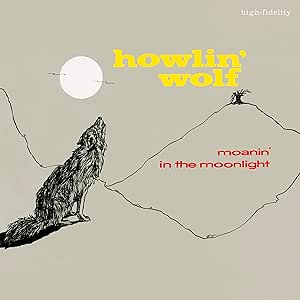
Moanin’ in the Moonlight is the legendary debut compilation album Released by Chess Records in 1959, the record stands as a towering cornerstone of post-war electric blues. It brings together iconic tracks recorded between 1951 and 1959 across Memphis and Chicago, immortalising Wolf’s gravelly, granite-carved vocals and primal harmonica playing. The album captures the raw transition from acoustic Delta traditions to the fierce, amplified roar of the city. Legendary producer and bassist Willie Dixon anchored the Chicago sessions, while master guitarists Hubert Sumlin and Willie Johnson laid down razor-sharp, distorted guitar lines that laid the groundwork for modern rock and roll. This precise, haunting sound directly inspired generations of British rock royalty, including Mick Jagger, Eric Clapton, and John Mayall. Notable tracks include the stupendour “smokestack lightnin’ ” , the single “Moanin’ At Midnight” became Howlin’ Wolf’s first hit It is an eerie and powerful track, which opens memorably with Wolf humming in a deep throbbing style before launching into blazing harmonica. “How Many More Years,” a mid-tempo blues featuring Ike Turner on piano, was a genuinely innovative track. “Evil,” a song sometimes listed as “Evil (Is Going On)” was written by the master songwriter Willie Dixon and suited Wolf’s menacing delivery. One of the excellent covers on the album is Roosevelt Sykes’ “Forty-Four Blues.”
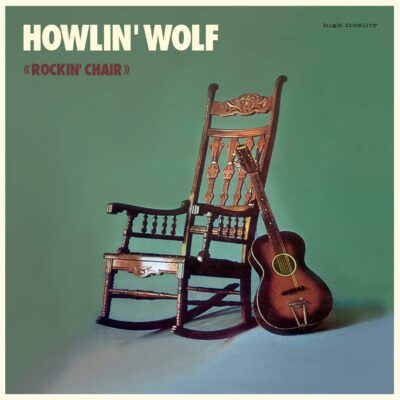
“The Rockin’ Chair Album” is the popular nickname for the self-titled second studio album Released in January 1962 by Chess Records, it is widely considered one of the most influential and foundational electric blues records of all time. The nickname stems directly from its iconic cover artwork, which features an acoustic guitar leaning against a wooden rocking chair. It functions as a compilation of highly successful singles released between 1957 and 1961. It features essential blues standards like “Spoonful,” “The Red Rooster,” “Wang Dang Doodle,” and “Back Door Man”.The album showcases the absolute peak of Chicago blues synergy, The tracks feature the brilliant guitar work of Hubert Sumlin, as well as a who’s who of blues sidemen, including pianist Otis Spann, bassist Willie Dixon, drummer Sam Lay, and a slew of guitarists (among them, Buddy Guy) and other contributors together with Wolf’s booming, unmistakable vocals. It’s easy to be confused about who’s playing when you have so many great musicians, but Sumlin’s guitar provides a voice equally as distinct as Wolf’s. Sumlin’s sound and phrasing leap out on equal footing with Wolf’s growling vocal style. It’s here on Howlin’ Wolf, where Wolf and Hubert Sumlin remind us on cut after cut what real blues is all about. The songs on this LP directly shaped the 1960s British Rock Invasion. Heavyweight bands like The Rolling Stones, Cream, Led Zeppelin launched their careers by covering tracks from this specific album.
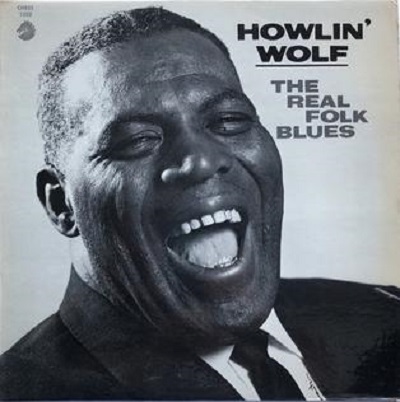
The Real Folk Blues is a compilation album released by Chess Records in 1965. The album’s songs, which were originally issued as singles, were recorded in Chicago between 1956 and 1965. one of the best introductions to this passionate, unpredictable, electric bluesman. rather than a greatest-hits sweep, it leans into tougher, less overplayed sides. Opening with the savage ‘Killing Floor,’ – with clipped, driving menace (later reshaped by Led Zeppelin on their debut). the album doesn’t let up in intensity, Focusing on Wolf’s hidden gems which gives the album a freshness a lot of blues compilations lack. Notable tracks “”Sittin’ on Top of the World:” A raw, electric take on the classic blues standard. “Tail Dragger:” A slow, brooding blues classic penned by Willie Dixon. “three Hundred Pounds of Joy:” A swaggering, humorous track celebrating Wolf’s massive physical stature, written by Willie Dixon. “Natchez Burning:” An apocalyptic, historical blues narrative detailing a tragic 1940 dance hall fire.”Built for Comfort:” Another Willie Dixon masterpiece that perfectly suited Wolf’s booming persona.
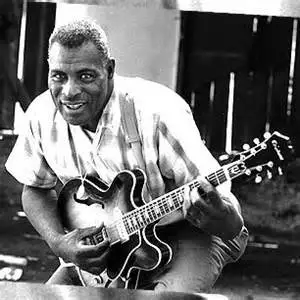
Chester Arthur Burnett (June 10, 1910 – January 10, 1976), better known by his stage name Howlin’ Wolf, was an American blues singer, guitarist and harmonica player. He was at the forefront of transforming acoustic Delta blues into electric Chicago blues, and over a four-decade career, recorded blues, rhythm and blues, rock and roll, and psychedelic rock. He is regarded as one of the most influential blues musicians ever.
Chester Arthur Burnett was born on June 10, 1910, in White Station, near West Point, Mississippi, to Gertrude Jones and Leon “Dock” Burnett. Burnett’s parents separated when he was a year old. Dock, who had worked seasonally as a farm labourer in the Mississippi Delta, moved there permanently while Jones and Burnett moved to Monroe County. Jones and Burnett would sing together in the choir of the Life Boat Baptist Church near Gibson, Mississippi, and Burnett would later claim that he got his musical talent from her. Jones kicked Burnett out of the house, for unknown reasons, during the winter when he was a child. He moved in with his granduncle Will Young, who had a large household and treated him badly. While in the Young household he worked almost all day and did not receive an education at the school house. When he was thirteen, he killed one of Young’s hogs in a rage after the hog had caused him to ruin his dress clothes; this enraged Young who then whipped him while chasing him on a mule. He then ran away and claimed to have walked 85 miles barefoot to join his father, where he finally found a happy home with his father’s large family. At the age of 17, Burnett gathered enough money to buy his first guitar. In 1930, Burnett met Charley Patton, the most popular bluesman in the Mississippi Delta at the time. The two became acquainted, and soon Patton was teaching him guitar. He also learned about showmanship from Patton. He played with Patton often in small Delta communities and would perform the guitar tricks he learned from him for the rest of his life. During the 1930s, Burnett performed in the South as a solo performer and with numerous blues musicians. By the end of the decade, he was a fixture in clubs, with a harmonica and an early electric guitar. It was around this time that Burnett got into some legal trouble in Hughes, Arkansas: While he was in town, he tried to protect a female acquaintance from an angry boyfriend, and the two men fought, with Burnett killing the man with a hoe. What happened after this is a matter of dispute; Burnett either fled the area, or did some jail time. In 1941,
he was inducted into the U.S. Army and was stationed at several bases around the country. Burnett was first sent to Pine Bluff, Arkansas, for basic training, and was given long hours performing menial work. Then he was transferred to Camp Blanding, in Starke, Florida, where he was assigned to the kitchen patrol. During the day he would cook food for the enlisted soldiers, and at night he would play the guitar in the assembly room. Burnett was then sent to a tutoring camp in Tacoma, Washington, where he was in charge of decoding communications. Because Burnett was functionally illiterate, having never received formal education, he was repeatedly beaten by the drill instructor for reading and spelling errors. Soon, he began having uncontrollable shaking fits, dizzy spells, fainting, and also began experiencing mental confusion. In 1943, he was evaluated at an Army mental hospital. In November 1943, Burnett was found unfit for duty and given an honourable discharge.He returned to his family, which had recently moved near West Memphis, Arkansas, and helped with the farming while also performing. In 1948 he formed a band and the Radio station KWEM in West Memphis began broadcasting his live performances. In December 1951, Leonard Chess of Chess Records was able to secure Howlin’ Wolf’s contract, and at the urging of Chess, he relocated to Chicago in late 1952. In Chicago, Howlin’ Wolf assembled a new band. The lineup of the band changed often over the years. Wolf employed many different guitarists, both on recordings and in live performance. He was able to attract some of the best musicians available because of his policy, unusual among bandleaders, of paying his musicians well and on time, even including their unemployment insurance and Social Security contributions. With the exception of a couple of brief absences in the late 1950s, Hubert Charles Sumlin remained a member of the band for the rest of Wolf’s career and is the guitarist most often associated with the Howlin’ Wolf sound. Howlin’ Wolf had a series of hits with songs written by Willie Dixon, who had been hired by the Chess brothers in 1950 as a songwriter. During that period, the competition between Muddy Waters and Howlin’ Wolf was intense.
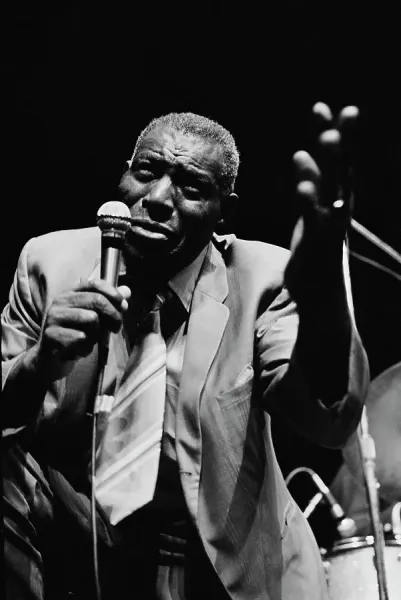
With a booming voice and an imposing physical presence, he is one of the best-known Chicago blues artists. AllMusic has described him as “a primal, ferocious blues belter with a roster of classics rivalling anyone else, and a sandpaper growl of a voice that has been widely imitated”. Several of his songs have become blues and blues rock standards. The Rock and Roll Hall of Fame listed “Little Red Rooster”, “Smokestack Lightnin’ “, “Killing Floor”, and “Spoonful” in its “500 Songs That Shaped Rock and Roll” and “Smokestack Lightnin’ ” was inducted into the Grammy Hall of Fame in 1999.
In the early 1960s, Howlin’ Wolf recorded several songs that became his most famous, despite receiving no radio play, many of which were written by Willie Dixon. Some songs would became part of the repertoires of British and American rock groups, who further popularized them. Howlin’ Wolf’s second compilation album, Howlin’ Wolf—often called “the rocking chair album” from its cover illustration—was released in 1962. During the blues revival in the 1950s and 1960s, black blues musicians found a new audience among white youths, and Howlin’ Wolf was among the first to capitalize on it. He toured Europe in 1964 as part of the American Folk Blues Festival. Also, in that year, the Rolling Stones recording of “Little Red Rooster” reached number one in the UK. In 1965, at the height of the British Invasion, the Stones came to America for an appearance on ABC-TV’s rock music show, Shindig! They insisted, as part of their appearing on the program, that Howlin’ Wolf would be their special guest. With the Stones sitting at his feet, Wolf performed an impassioned version of “How Many More Years” with a few million people watching his network TV debut. In the late 1960s and early 1970s, Howlin’ Wolf recorded albums with other established musicians starting with The Super Super Blues Band (1968), which featured Bo Diddley and Muddy Waters. The Howlin’ Wolf Album (1969) had psychedelic rock and free-jazz musicians like Phil Upchurch. The Howlin’ Wolf Album, like rival bluesman Muddy Waters’s album Electric Mud, was designed to appeal to the hippie audience. British rock musicians Eric Clapton, Steve Winwood, Ian Stewart, Bill Wyman, and Charlie Watts backed him for The London Howlin’ Wolf Sessions, which proved more successful with British audiences than American. His last album The Back Door Wolf (1973) was entirely composed of new material. It was recorded with musicians who regularly backed him on stage. The album is shorter than any other he recorded, a little more than 35 minutes, because of his declining health. Wolf’s last public performance was in November 1975 at the International Amphitheatre in Chicago. Wolf reportedly gave an “unforgettable” performance, even crawling across the stage during the song, “Crawling King Snake”. The crowd gave him a five-minute standing ovation. When he got off the stage after the concert was over, a team of paramedics had to revive him. In January 1976, Burnett checked into the Edward Hines Jr. Veterans Administration Hospital in Hines, Illinois, for kidney surgery. Three days before his death, a carcinoma was found in his brain. He died from a combination of the tumour, heart failure, and kidney disease on January 10, 1976, at the age of 65.
Sound quality is important and the better online Streaming services will offer superior sound quality. As always, We do encourage you to purchase Favoured albums from good online or High street record stores.
Artists in upcoming issues: John mayall, joe bonamassa, john lee hooker.....Keep Listening!! JOIN THE CONVERSATION...
“Comments are most welcome and appreciated”