
The blues have influenced many other musical styles. The blues have had their greatest influence on rock music and blues and jazz are closely related. While hip-hop and rap music tends to be harmonically and melodically static. artists such as Kanye West and Jay-Z have used samples extracted from blues songs as the basis for new music. The lyrics too, are similar to early blues, commenting on personal situations, unjust societies and disillusionment with the urban environments in which the musicians live.
contemporary Music – issue #5 – Blues
The blues emerged at a particular time, in a particular place as a response to social and economic conditions. The Blues is a music genre and musical form that originated among African Americans. This genre of music came from the souls of slaves and emerged simultaneously throughout the South, originating as early as 1860. The blues has a distinct melancholic and sombre tone, which is achieved through vocal techniques such as melisma, rhythmic techniques such as syncopation, and instrumental techniques such as “choking” guitar strings on the neck or applying a metal slide to the guitar strings to create a whining voice-like sound. Melisma is the act of singing several different notes while holding a single syllable of text. Chroniclers began to report about blues music at the dawn of the 20th century. The first publication of blues sheet music was in 1908. Blues has since evolved from unaccompanied vocal music and oral traditions of slaves into a wide variety of styles and subgenres. Blues songs are lyrical rather than narrative; blues singers are expressing feelings rather than telling stories. The emotion expressed is generally one of sadness or melancholy, often due to problems of love but also oppression and hard times. The Great Depression and the World Wars caused the geographic dispersal of the blues as millions of Blacks left the South for the cities of the North. The blues became adapted to the more sophisticated urban environment. Lyrics took up urban themes, and the blues ensemble developed as the solo bluesman was joined by a pianist or harmonica player and then by a rhythm section consisting of bass and drums. The electric guitar and the amplified harmonica created a driving sound of great rhythmic and emotional intensity.
Join the Conversation!!!
we will Feature Up to 4 Albums from Artists representative of a range of the Many sub-genres. We Hope to encourage Listeners of all tastes and passions. So Get your Headphones on and Consider discussing the musical Offering and sharing your views with like-minded peers.
In Issue #5, we feature john Mayall
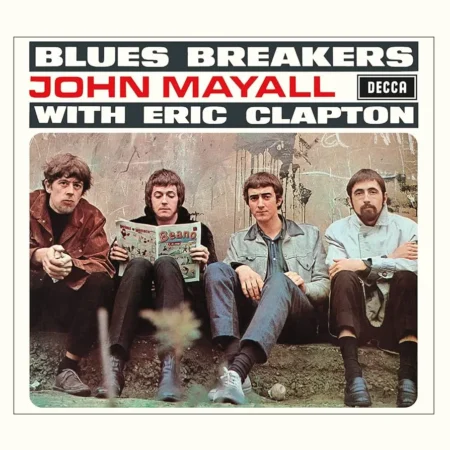
1966’s so-called Beano album is the high-water mark of the 60s British blues boom, Mayall’s finest hour and Eric Clapton’s precocious launch pad. From the languid opening swoop of Otis Rush’s All Your Love, through the jet-fuelled Hideaway, to spring-heeled Mayall originals like Key To Love and Little Girl, this is amped-up blues rock that walks a tightrope between reverential and rip-it-up exciting. : Clapton paired a vintage Gibson Les Paul Standard with an overdriven Marshall Model 1962 2×12 combo amplifier. This specific setup birthed the thick, distorted tone that defined modern rock guitar and inspired the legendary “Clapton is God” graffiti across London. Beyond multi-instrumentalist leader John Mayall, the rhythm section consisted of drummer Hughie Flint and bassist John McVie. Notabble tracks “All Your Love”: An intense Otis Rush cover that opens the album and establishes Clapton’s searing tone right out of the gate.
“Hideaway”: A blistering rendition of Freddie King’s instrumental standard, which remains a rite of passage for blues-rock guitarists.
“Ramblin’ on My Mind”: A cover of the Robert Johnson classic featuring Eric Clapton’s very first recorded solo lead vocal. “Steppin’ Out”: A high-octane James Bracken instrumental showcasing Clapton’s dazzling, fast-paced soloing skills.
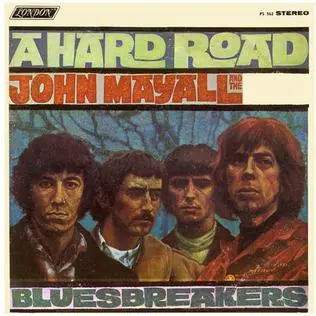
A Hard Road is the seminal third album (and second studio album) released on 1967. Following the sudden departure of Eric Clapton, the album famously introduced a young Peter Green on lead guitar, cementing its place as a classic cornerstone of the 1960s British blues boom. The record was a commercial success.. The album features a blend of tight Mayall originals and deeply respectful interpretations of American blues staples:“The Stumble” & “Someday After a While (You’ll Be Sorry)”: Exceptional covers of Freddie King tracks that highlighted Green’s emotional and distinct guitar style. “The Supernatural”: A haunting, Green-penned instrumental masterpiece. Its long, sustained guitar tones directly foreshadowed his work on Fleetwood Mac classics like “Albatross” and “Black Magic Woman”. “A Hard Road”: The driving, heavy-hearted title track. “Dust My Blues”: A fiery rendition of Elmore James’ classic. The band displays a deep respect for the blues form and are frequently praised for keeping the focus lean and mean without straying into self-indulgent, over-long solos. While Mayall acts as the primary frontman with his signature earnest, reedy vocals and stomping piano/harmonica work, Green steps up to the microphone on a few tracks (such as “You Don’t Love Me”), showcasing an understated, deep vocal style.
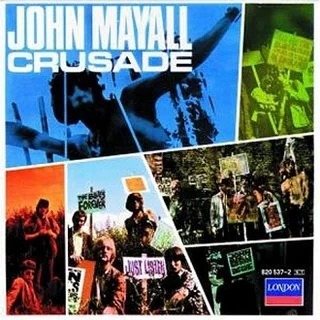
Crusade is the third studio album, released in September 1967 through Decca Records. It is the official recording debut of the legendary 18-year-old guitarist Mick Taylor, who joined the band to replace Peter Green and later gained worldwide fame as a member of The Rolling Stones. Taylor’s performance is indeed the highlight, just as Eric Clapton and Peter Green’s playing was on the previous albums. The album has 12 tracks, some of them penned by Mayall, some of them covers. The centrepiece of the album is a beautiful instrumental co-written by Mayall and Mick Taylor titled “Snowy Wood,” Other notable tracks include “Oh, Pretty Woman”: Written by A.C. Williams, this upbeat track famously opens the album. “Driving Sideways”: An energetic instrumental track written by Freddie King and Sonny Thompson. Mayall’s “The Death of J B Lenoir” stays in the mind. Its haunting piano line and Mayall’s impassioned vocal, as he mourns his hero, creates a fitting elegy to a great bluesman. All of the material is strong and repays repeated listening. “I Can’t Quit You Baby”: Cover of the iconic Willie Dixon blues standard and “Checkin’ Up on My Baby”: Cover of the classic harmonica-driven song by Sonny Boy Williamson II. What the album does, is allow Mayall to stretch out, show his range and enjoy himself. Everything from jazz-tinged or funk-driven through to 12 bar straight ahead Chicago is here. It really is a tremendous listen.
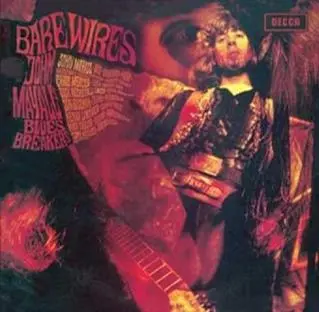
Released in June 1968 on Decca Records, Bare Wires is the seminal, genre-bending studio album by John Mayall & The Bluesbreakers. It serves as a historic transition point for the band, expanding their classic British blues sound into pioneering jazz-rock fusion. It was also Mayall’s highest-charting release in the UK. The album is famous for its format: The seven songs on the album’s A-side (“Bare Wires”, “Where Did I Belong”, “I Started Walking”, “Open Up a New Door”, “Fire”, “I Know Now” and “Look in the Mirror”) are arranged into a medley and combined into a single track with the title “Bare Wires Suite”. The Album’s B side consists of distinct standalone tracks and remains closer to the blues Theme. An exception is the nervous-jazzy “She’s Too Young” blending traditional jazz composition with heavy jungle breaks. There is classic blues “Killing Time” with its poignant sax and guitar solos. Touching also “Sandy” with its acoustic bottleneck. But also “I’m a Stranger”, “No Reply” with Wah-Wah guitar and the instrumental “Hartley Quits” all serving to keep the Blues fans happy.
In this particular iteration of the Bluesbreakers Mayall assembled an incredible roster of musicians, some of whom went on to form influential rock and jazz-fusion groups: Mick Taylor: Lead guitar and Hawaiian guitar (later joined the Rolling Stones); Jon Hiseman: Drums and percussion (went on to form Colosseum); Tony Reeves: Bass guitar and string bass and Dick Heckstall-Smith: Tenor and soprano saxophones (also joined Colosseum); Chris Mercer: Tenor and baritone saxophones; Henry Lowther: Cornet and violin.
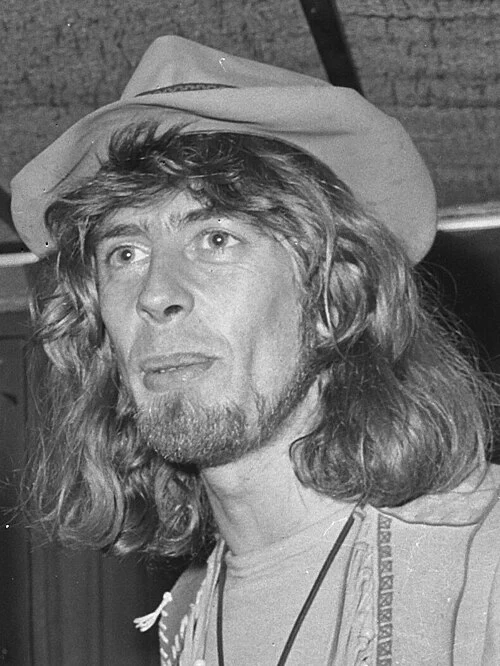
John Brumwell Mayall (1933 – 2024) was an English blues and rock musician, songwriter and producer. In the 1960s, he formed John Mayall & the Bluesbreakers, a band that has counted among its members some of the most famous blues and blues rock musicians of all time. A singer, guitarist, harmonica player, and keyboardist, he had a career that spanned nearly seven decades, remaining an active musician until his death aged 90. Mayall has often been referred to as the “godfather of the British blues”, and was inducted into the Rock and Roll Hall of Fame in the musical influence category in 2024.
Born in Macclesfield, Cheshire, on 29 November 1933, John Brumwell Mayall grew up in Cheadle Hulme. He was the son of Murray Mayall, a guitarist who played in local pubs. From an early age he was drawn to the sounds of American blues players such as Lead Belly, Albert Ammons, Pinetop Smith, and Eddie Lang, and taught himself to play the piano, guitar, and harmonica. Mayall was sent to Korea as part of his national service, and during a period of leave bought his first electric guitar in Japan. Back in England, he enrolled at Manchester College of Art and started playing with a semi-professional band, the Powerhouse Four. After graduation, he obtained a job as an art designer, but continued to play with local musicians. In 1962 Mayall became a member of the Blues Syndicate. The band was formed by trumpeter John Rowlands and alto saxophonist Jack Massarik, who had seen the Alexis Korner band at a Manchester club and wanted to try a similar blend of jazz and blues. It also included rhythm guitarist Ray Cummings and drummer Hughie Flint, whom Mayall already knew. In 1962 John and his band were frequent and popular artists at all-night R&B sessions at the Twisted Wheel cellar club in central Manchester. Alexis Korner persuaded Mayall to opt for a full-time musical career and move to London, where Korner introduced him to many other musicians and helped them to find gigs. In late 1963, with his band, which was now called the Bluesbreakers, Mayall started playing at the Marquee Club. The line-up included John McVie on bass. The next spring Mayall obtained his first recording date with producer Ian Samwell. The band backed John Lee Hooker on his British tour in 1964. Mayall was offered a recording contract by Decca records. In April 1965, former Yardbirds guitarist Eric Clapton joined the band and John Mayall’s career entered a decisive phase. The Bluesbreakers began attracting considerable attention. Clapton left for a jaunt to Greece and Peter Green took charge. John McVie was dismissed, and during the next few months Jack Bruce, from the Graham Bond Organisation, played bass. In November 1965, Clapton returned, and Green departed as Mayall had guaranteed Clapton his spot back in the Bluesbreakers.
In April 1966, the Bluesbreakers returned to Decca Studios to record Blues Breakers with Eric Clapton which was released in the UK in July 1966. The album was Mayall’s commercial breakthrough and has since gained classic status, largely for the audacious aggressiveness and molten fluidity of Clapton’s guitar playing. Mayall had to replace Clapton, when he left to form Cream, and he succeeded in persuading Peter Green to come back. During the following year, with Green on guitar and various other sidemen, some 40 tracks were recorded. The album A Hard Road was released in February 1967. But Peter Green gave notice and soon started his own project, Peter Green’s Fleetwood Mac, which eventually was to include all three of Mayall’s Bluesbreakers at this time: Green, McVie, and drummer Mick Fleetwood, who was a Bluesbreaker for only a few weeks. A six-piece line-up—consisting of Mayall, Mick Taylor as lead guitarist, John McVie still on bass, Hughie Flint or Keef Hartley on drums, and Rip Kant and Chris Mercer on saxophones—recorded the album Crusade in July 1967. Line-up changes occurred often. The Mayall line-up retained Mick Taylor and added drummer Colin Allen (formerly of Zoot Money’s Big Roll Band and a young bassist named Stephen Thompson. In August 1968 the new quartet recorded Blues from Laurel Canyon. In June 1969, after nearly two years with Mayall, Taylor left and joined the Rolling Stones. Mayall tried a new format with lower volume, acoustic instruments, and no drummer. Along with the big change in sound, Mayall decided on a big change in scenery: a move to Los Angeles. The new band made its US debut at the Newport Jazz Festival in July 1969. Mayall continued the experiment of formations without drummers on two more albums, although he took on a new electric blues-rock-R&B band in guitarist Harvey Mandel and bassist Larry Taylor, both plucked from Canned Heat, and wailing violinist Don “Sugarcane” Harris.
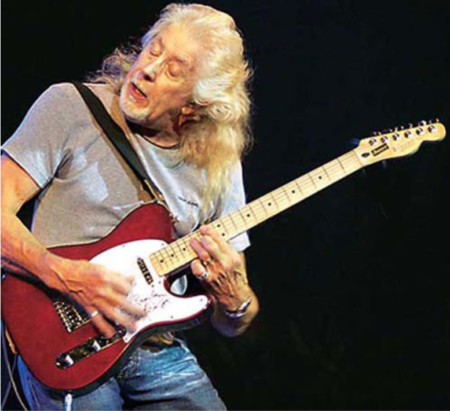
Mayall was a talented singer, keyboardist, harmonica player, and guitarist. However, his greatest historical impact was his unique eye for discovering elite guitarists and musicians. His band acted as an academy where young talent could hone their skills:
By the start of the 1970s, Mayall had relocated to the United States where he spent most of the next 15 years, recording with local musicians for various labels..At this stage of his career most of Mayall’s music was rather different from electric blues played by rock musicians, incorporating jazz, funk or pop elements and even adding female vocals. In 1982, Mayall was reunited with Mick Taylor, John McVie and Colin Allen, three musicians of his 1960s line-ups, for a two-year world tour from which a live album would emerge a decade later On the occasion of the 40th year of his career, Mayall invited fellow musicians for the recording of a celebratory album. Along for the Ride appeared in 2001, credited to John Mayall and Friends with twenty names listed on the cover, including some Bluesbreakers, old and new. In November 2008, Mayall announced on his website he was disbanding the Bluesbreakers, to cut back on his heavy workload and give himself freedom to work with other musicians. Mayall died at his home in California on 22 July 2024, at the age of 90. He was interred at Hollywood Forever Cemetery.
Sound quality is important and the better online Streaming services will offer superior sound quality. As always, We do encourage you to purchase Favoured albums from good online or High street record stores.
Artists in upcoming issues: joe bonamassa, Johnny Winter, john lee hooker.....Keep Listening!! JOIN THE CONVERSATION...
“Comments are most welcome and appreciated”