
Classical Music – issue #13
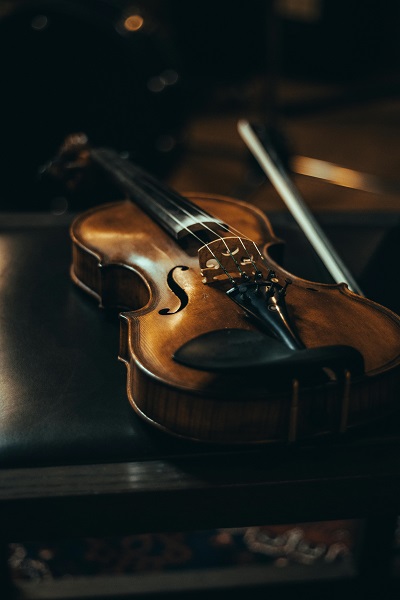
Classical music generally refers to the art music of the Western world. Classical music is often characterized by formality and complexity in its musical form and harmonic organization. particularly with the use of polyphony, music in which several different tunes are played or sung at the same time. Since the ninth century, it has been primarily a written tradition, spawning a sophisticated notational system.
Rooted in the patronage of churches and royal courts in Europe. early medieval music is Chiefly Religious monophonic and vocal. The Baroque period (1580–1750) saw the relative standardization of common-practice tonality. Together with, the increasing importance of musical instruments, which grew into ensembles of considerable size. The common-practice period was a period in which the tonal system was regarded as the only basis for composition. The word tonality is sometimes used as a synonym for “key.”.In the shorter but pivotal Classical period (1730–1820), composers such as Mozart created widely admired examples of absolute music. including symphonies, string quartets and concertos. Absolute music (sometimes abstract music) is instrumental music not intended to represent or illustrate something else. The ensuing Romantic music (1800–1910) focused instead on programmatic music. the art song, symphonic poem and various piano genres were important vessels. Program music is often written so that the notes themselves convey, to some degree, the meaning of what is portrayed.
Thus the thunderstorm in Beethoven’s symphony includes loud timpani strokes to convey the thunder. The shrill piccolo music to depict the shrieking winds. During this time virtuosity was celebrated, immensity was encouraged, while philosophy and nationalism were embedded. all aspects that converged in the operas of Richard Wagner.By the 20th century, the prominence of popular music greatly increased. Many Classical composers actively avoided past techniques and genres in the lens of modernism. with some abandoning tonality in place of serialism.a serial pattern in music is merely one that repeats over and over within a composition. The term serial music is often used interchangeably with 12-tone music. However, the latter is more properly an example of the former. others found new inspiration in folk melodies or impressionist sentiments.Trends of the mid-20th century to the present day include New Simplicity, New Complexity, Minimalism, Spectral music. more recently Postmodern music and Postminimalism.
Join the Conversation!!!
we will Feature Significant Compositions from Artists representative of the various classical Periods. We Hope to encourage Listeners of all tastes and passions. So Get your Headphones on and Consider discussing the musical Offering and sharing your views with like-minded peers.
In Issue #13, we feature Jean Sibelius
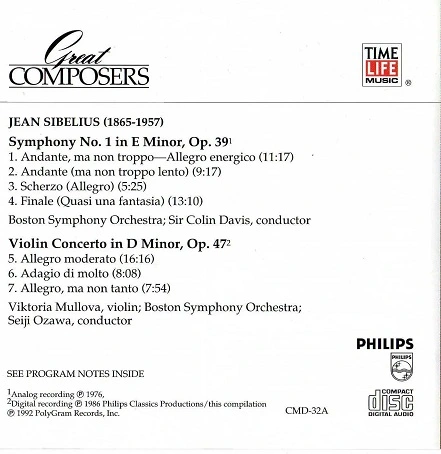
Symphony No. 1 in E minor, Op. 39 is a powerful four-movement orchestral work marks his first official foray into the symphonic form after establishing his reputation with programmatic tone poems. The work balances late-Romantic, Tchaikovskian passion with the distinct, brooding Nordic voice. It opens unconventionally with a forlorn, unaccompanied clarinet solo playing a haunting theme over a quiet timpani roll. the second movement features a warm, comforting melody that eventually shifts into furious, stormy passages before returning to its peaceful origins: Then a rhythmic and driving third movement heavily driven by crisp plucking strings (pizzicato) and aggressive brass hits. A sweeping, dramatic finale brings back the opening clarinet melody, but this time, it is delivered by a massive, emotional unison of the entire string section. The piece closes tragically, ending with two stark pizzicato chords fading into silence. Violin Concerto in D Minor, Op. 47. Widely recognized as one of the most popular, technically demanding, and symphonically vast masterpieces of the 20th-century violin repertoire. movement I. Allegro moderato: A hauntingly atmospheric movement opening with a whisper of muted strings. Movement II. Adagio di molto: A deeply romantic and melancholy section. movement III. Allegro, ma non tanto: A thrilling, fiercely rhythmic finale heavily driven by percussion and lower strings.
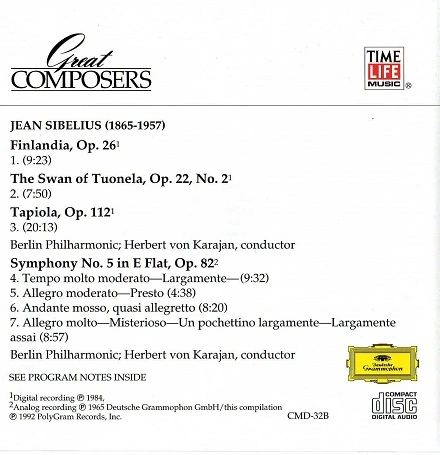
Finlandia. A symphonic poem which stands as one of the most potent musical symbols of national identity and political protest ever written, capturing the Finnish struggle for independence against the oppressive censorship of the Russian Empire. It is divided into distinct narrative moods: The Oppression: The piece opens with a dark, threatening, and heavy brass-driven motif symbolizing the grim reality of foreign domination. The Battle: The music quickly gains momentum, breaking into a turbulent, driving martial section packed with explosive fanfares that embody the resilience and national awakening of the Finnish people. The Hymn: Towards the end, the chaos abruptly yields to a serene, breathtakingly calm folk-like melody. The Swan of Tuonela (Op. 22, No. 2) is a hauntingly beautiful, single-movement tone poem – the piece is the second movement of Sibelius’s Lemminkäinen Suite which draws from Finland’s national epic mythology. The cor anglais acts as the literal voice of the swan. Its plaintive, piercing timbre provides one of the most celebrated solo moments for the instrument in classical music history. Sibelius uses an unusually large number of quiet, muted string players to create a complex, vibrating texture that sounds exactly like dark, rippling water.Tapiola, Op. 112, is a seminal symphonic tone poem and stands as Sibelius’s last major orchestral masterpiece, encapsulating the haunting, ancient grandeur of the Finnish wilderness. Sibelius continuously shifts, stretches, and morphs the piece from ghostly, fragile whispers just above silence to terrifying orchestral outbursts. The piece reaches a terrifying climax driven by chromatic, howling woodwinds and strings. This sequence perfectly mimics a devastating arctic blizzard screaming through a dense pine canopy.
The Symphony No. 5 in E-flat major, Op. 82, is one of the most celebrated and triumphant orchestral works of the 20th century. The final version of the symphony is structured into three movements: I. Tempo molto moderato – Allegro moderato: This movement is famous for merging two originally distinct sections. It opens with a majestic horn call, gradually shifting and accelerating “like a river” into a lively, rustic waltz. II. Andante mosso, quasi allegretto: A tranquil, deceptive set of variations using pizzicato strings and woodwinds. It acts as a bridge, quietly preparing the musical elements that erupt in the next movement. III. Allegro molto: The heroic finale driven by rapid, rushing strings that reveal the immortal “Swan Hymn” motif in the horns. The symphony reaches an unforgettable, unconventional conclusion featuring six staggered, dissonant orchestral chords separated by intense silence.
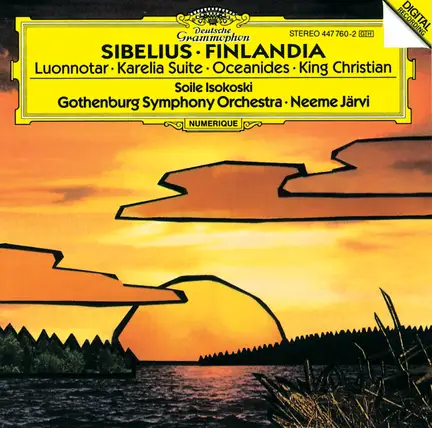
Karelia Suite, Op. 11, is one of his most popular and accessible orchestral works. It is known for its bright, patriotic atmosphere and folk-like simplicity. The Three Movements: I. Intermezzo (Allegro)A march-like, energetic movement capturing a procession of Lithuanian nobles. It features prominent French horns and a driving rhythmic pulse that gives it a joyful, outdoor feel. II. Ballade (Andante cantabile) A more reflective, melancholic movement depicting a 15th-century Swedish king listening to a minstrel. It features a beautiful, expressive cor anglais (English horn) solo. III. Alla Marcia (Moderato allegro) The most famous movement of the suite. A highly catchy, buoyant, and celebratory march that builds into a triumphant, brass-heavy climax. Andante Festivo (JS 34a–b) is a solemn, single-movement composition. An overlapping vocal-style structure with simple variations over a steady pulse. A solemn, hymn-like work where the music relies on flowing, expressive melodies, shifts in volume and intensity, and a rich, unified sound created exclusively by violins, violas, cellos, and basses.
The Oceanides (Op. 73) is a single-movement orchestral tone poem, an explicitly impressionistic work, vividly capturing the shifting textures and immense power of the sea. Sibelius constantly evolves his musical material across three continuous, informal stages: A Placid Ocean: The piece opens quietly with muted timpani, shimmering strings, and high flutes depicting nymphs dancing on top of the waves. Two harps provide heavy coloration. A Gathering Storm: The musical texture thickens as deep cellos, brass, and rumbling percussion signal a mounting tempest. The Wave-Crash Climax: The tension builds to a thunderous, terrifying wave-crash climax. As the storm subsides, a final, quiet chord sounds to evoke the limitless expanse of the sea.
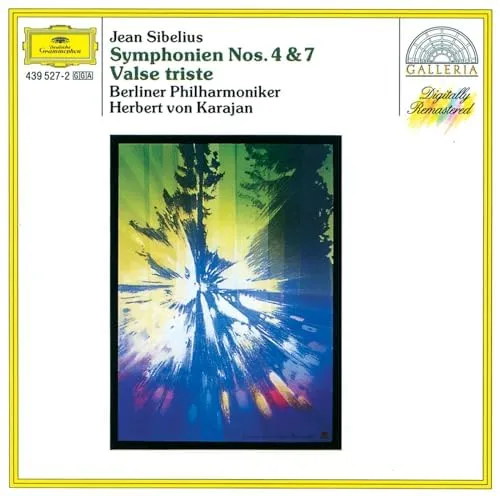
Symphony No. 7 in C major, Op. 105. It is widely celebrated as his most remarkable compositional achievement and stands as his final completed work in the genre. An unprecedented 22-minute single-movement, contains all the drama of much longer pieces. Rather than distinct movements (fast-slow-scherzo-fast), it fuses elements of a slow introduction, scherzo, sonata form, and rondo into one fluid form. Jean Sibelius’s Symphony No. 7 in C major, Op. 105, is a single-movement masterpiece anchored by a majestic, wide-ranging trombone theme. This glorious, solemn melody acts as the structural and emotional pillar of the entire work, returning at key moments before the final, fading C-major chord. The vivacissimo section functions as a turbulent, minor-mode storm episode. It accelerates the tempo and unleashes swirling string scales and sharp brass accents, serving as a powerful dramatic turning point before the music transitions into a calmer pastoral landscape. Symphony No. 4 in A minor, Op. 63, is widely considered his most austere, introspective, and modern masterpiece. The symphony deviates from standard form by opening with a slow, dark movements rather than a traditional fast introduction: I. Tempo molto moderato, quasi adagio – A brooding, fragmented movement that emerges from the deep registers of cellos, basses, and bassoons. II. Allegro molto vivace – A deceptive, fleeting scherzo that begins with false cheerfulness before disintegrating into rhythmic instability and dark undercurrents. III. Il tempo largo – The emotional heart of the piece. It presents a stark, slow evolution of melodies often described as a desperate “search for a spiritual home”. IV. Allegro – A complex finale featuring the glockenspiel. It closes not with a triumphant climax, but with a series of quiet, unadorned, and haunting blank chords in A minor
Valse triste (Sad Waltz), Op. 44, No. 1, is a famous short orchestral work originally written in 1903 as part of the incidental music for the play Kuolema (Death), written by his brother-in-law Arvid Järnefelt, Musically, Sibelius builds incredible tension within a brief runtime. It begins subtly with a low, creeping rhythmic pulse in the strings. Then, Scurrying woodwinds and strings introduce moments of false gaiety until the atmosphere becomes increasingly frantic and abruptly halts. It closes with a hauntingly quiet, unresolved three-chord postlude played by a solo string quartet.
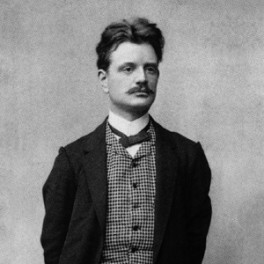
Jean Sibelius (1865 – 1957) was a Finnish composer of the late Romantic and early modern periods. He is widely regarded as his country’s greatest composer, and his music is often credited with having helped Finland develop a stronger national identity when the country was struggling from several attempts at Russification in the late 19th century.
Sibelius was born on 8 December 1865 in Hämeenlinna in the Grand Duchy of Finland, an autonomous state within the Russian Empire. Sibelius’s father died of typhoid in July 1868, leaving substantial debts. As a result, his mother—who was again pregnant—had to sell their property and move the family into the home of Katarina Borg, her widowed mother, who also lived in Hämeenlinna. Sibelius was therefore brought up in a decidedly female environment, the only male influence coming from his uncle, Pehr Ferdinand Sibelius, who gave the boy a violin when he was ten years old and later encouraged him to maintain his interest in composition. From an early age, Sibelius showed a strong interest in nature, frequently walking around the countryside when the family moved to Loviisa on the coast for the summer months. In Hämeenlinna, when he was seven, Sibelius’s aunt Julia was brought in to give him piano lessons on the family’s upright instrument. He progressed by improvising on his own and learned to read music. He later turned to the violin, which he preferred. He participated in trios with his elder sister Linda on piano, and his younger brother Christian on the cello. Sibelius soon began playing in quartets with neighbouring families, furthering his experience performing chamber music. In 1881, he began violin lessons with the local bandmaster, Gustaf Levander, immediately developing a particularly strong interest in the instrument. Setting his heart on a career as a great violin virtuoso, he soon became an accomplished player. Despite such success as an instrumentalist, he ultimately chose to become a composer. After graduating from high school in 1885, Sibelius began to study law at the Imperial Alexander University in Finland but, showing far more interest in music, soon moved to the Helsinki Music Institute (now the Sibelius Academy) where he studied from 1885 to 1889. Sibelius continued his studies in Berlin (from 1889 to 1890) and in Vienna (from 1890 to 1891).
He enjoyed his year in Vienna where he turned to orchestral composition, composing an Overture in E major and a Scène de Ballet. While embarking on Kullervo, an orchestral work with chorus and soloists inspired by the Kalevala. It was around this time that Sibelius finally abandoned his cherished aspirations as a violinist. To pay his way, from 1892 Sibelius had taken on teaching assignments at the Music Institute and at Kajanus’s conducting school but this left him insufficient time for composing. The situation improved considerably when in 1898 he was awarded a substantial annual grant, initially for ten years and later extended for life. In January 1899, Sibelius embarked on his First Symphony at a time when his patriotic feelings were being enhanced by the Russian emperor Nicholas II’s attempt to restrict the powers of the Grand Duchy of Finland. The symphony was well received and the blatantly patriotic Song of the Athenians for boys’ and men’s choirs immediately brought Sibelius the status of a national hero. Another patriotic work followed in the form of eight tableaux depicting episodes from Finnish history subsequently reworked as Scènes historiques. The last tableau, Finland Awakens, was particularly popular; after minor revisions, it became the well-known Finlandia. During a trip with his family to Rapallo, Italy, in 1901, Sibelius began to write his Second Symphony, partly inspired by the fate of Don Juan in Mozart’s Don Giovanni. It was completed in early 1902 and was received with tremendous enthusiasm by the Finns. In 1903, Sibelius spent much of his time in Helsinki where he indulged excessively in wining and dining, running up considerable bills in the restaurants. He continued to compose and one of his major successes being Valse triste.
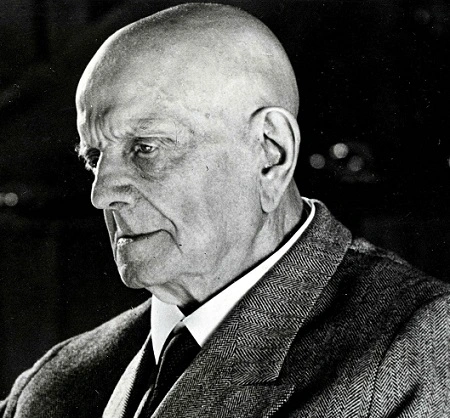
The core of his oeuvre is his set of seven symphonies, which, like his other major works, are regularly performed and recorded in Finland and countries around the world. His other best-known compositions are Finlandia, the Karelia Suite, Valse triste, the Violin Concerto, the choral symphony Kullervo, and The Swan of Tuonela (from the Lemminkäinen Suite). His other works include pieces inspired by nature, Nordic mythology, and the Finnish national epic, the Kalevala; over a hundred songs for voice and piano; incidental music for numerous plays; the one-act opera The Maiden in the Tower; chamber music, piano music, Masonic ritual music, and 21 publications of choral music.
Early in 1904, he finished his Violin Concerto it was not a success, initially and it led to a revised, condensed version. In 1906, after a short, rather uneventful stay in Paris at the beginning of the year, Sibelius spent several months composing at his new home Ainola (Aino’s Place), his major work of the period being Pohjola’s Daughter and incidental music for Belshazzar’s Feast, also adapting it as an orchestral suite. From the beginning of 1907, his lifestyle had a disastrous effect on the health of Aino who was driven to retire to a sanatorium, suffering from exhaustion. While she was away, Sibelius resolved to give up drinking, concentrating instead on composing his Third Symphony and although its more classical approach surprised the audience, Flodin commented that it was “internally new and revolutionary”. In 1907, Sibelius underwent a serious operation for suspected throat cancer. Early in 1908, he had to spend a spell in hospital. His smoking and drinking had now become life-threatening. The impact of this brush with death has been said to have inspired works that he composed in the following years, including Luonnotar and the Fourth Symphony. The First World War interrupted receipt of his royalties from abroad although he was far away from the fighting. To make ends meet, he composed smaller works for publication in Finland. In March 1915, he was able to travel to Gothenburg in Sweden, where his work The Oceanides was widely appreciated. He began working on his Fifth Symphony and completed it by his 50th birthday. A year later, in 1916, Sibelius presented the revised version of his Fifth Symphony in Turku, combining the first two movements and simplifying the finale. The start of the Russian Revolution saw Sibelius compose his Jäger March. The piece proved particularly popular after the Finnish parliament accepted the Senate’s declaration of independence from Russia in December 1917. In 1919, Sibelius, together with Aino, he visited Copenhagen on his first trip outside Finland since 1915, successfully presenting his Second Symphony. In November he conducted the final version of his Fifth Symphony, receiving repeated ovations from the audience. By the end of the year, he was already working on the Sixth. In 1920, despite a growing tremor in his hands, Sibelius composed the Hymn of the Earth and orchestrated his Valse lyrique, helped along by drinking wine. Sibelius enjoyed a highly successful trip to Britain in early 1921—conducting several concerts around the country, including the Fourth and Fifth symphonies. Sibelius composed prolifically until the mid-1920s, but after completing his Seventh Symphony (1924), the incidental music for The Tempest (1926), and the tone poem Tapiola (1926), he stopped producing major works in his last 30 years. While retaining an active but not always favourable interest in new developments in music his early retirement has perplexed scholars, Sibelius was clear about its cause — he simply felt he had written enough. On the evening of 20 September 1957, Sibelius died of a brain haemorrhage at Ainola, at the age of 91.
Sound quality is important and the better online Streaming services will offer superior sound quality. As always, We do encourage you to purchase Favoured albums from good online or High street record stores.
Artists in upcoming issues: Ralph Vaughan Williams, franz Liszt, peter Maxwell davies......Keep Listening!! JOIN THE CONVERSATION...
“Comments are most welcome and appreciated”