Classical Music – issue #10
Classical music generally refers to the art music of the Western world. Classical music is often characterized by formality and complexity in its musical form and harmonic organization. particularly with the use of polyphony, music in which several different tunes are played or sung at the same time. Since the ninth century, it has been primarily a written tradition, spawning a sophisticated notational system.
Rooted in the patronage of churches and royal courts in Europe. early medieval music is Chiefly Religious monophonic and vocal. The Baroque period (1580–1750) saw the relative standardization of common-practice tonality. Together with, the increasing importance of musical instruments, which grew into ensembles of considerable size. The common-practice period was a period in which the tonal system was regarded as the only basis for composition. The word tonality is sometimes used as a synonym for “key.”. In the shorter but pivotal Classical period (1730–1820), composers such as Mozart created widely admired examples of absolute music. including symphonies, string quartets and concertos. Absolute music (sometimes abstract music) is instrumental music not intended to represent or illustrate something else. The ensuing Romantic music (1800–1910) focused instead on programmatic music. the art song, symphonic poem and various piano genres were important vessels. Program music is often written so that the notes themselves convey, to some degree, the meaning of what is portrayed.
Thus the thunderstorm in Beethoven’s symphony includes loud timpani strokes to convey the thunder. The shrill piccolo music to depict the shrieking winds. During this time virtuosity was celebrated, immensity was encouraged, while philosophy and nationalism were embedded. all aspects that converged in the operas of Richard Wagner.By the 20th century, the prominence of popular music greatly increased. Many Classical composers actively avoided past techniques and genres in the lens of modernism. with some abandoning tonality in place of serialism.a serial pattern in music is merely one that repeats over and over within a composition. The term serial music is often used interchangeably with 12-tone music. However, the latter is more properly an example of the former. others found new inspiration in folk melodies or impressionist sentiments.Trends of the mid-20th century to the present day include New Simplicity, New Complexity, Minimalism, Spectral music. more recently Postmodern music and Postminimalism.
Join the Conversation!!!
we will Feature Significant Compositions from Artists representative of the various classical Periods. We Hope to encourage Listeners of all tastes and passions. So Get your Headphones on and Consider discussing the musical Offering and sharing your views with like-minded peers.
In Issue #10, we feature Wolfgang Amadeus Mozart
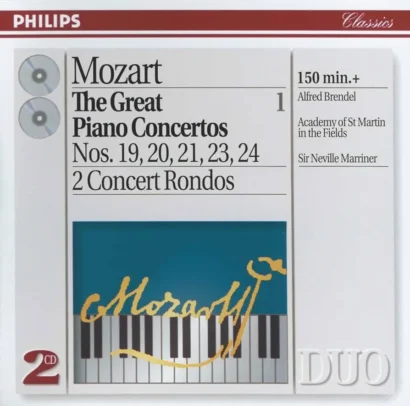
The Piano Concerto No. 20 in D minor, K. 466, composed in 1785, is widely celebrated as one of his most dramatic, influential, and sublime masterpieces. a traditional three-movement classical structure: I. Allegro (D minor): Instantly establishes a tense and ominous atmosphere with driving, syncopated rhythms in the strings before the piano arrives like a dramatic protagonist entering a troubled landscape.II. Romance (B-flat major): A lyrical and deeply peaceful five-part rondo. However, its serene mood is violently interrupted halfway through by a turbulent, fast-paced storm section written in G minor. III. Allegro assai (D minor / D major): A highly energetic, driving sonata-rondo that maintains its fiery minor-key tension until the very end. In the final coda, the piece unexpectedly shifts into a bright, joyful D major sunshine to close out the performance. Piano Concerto No. 21 in C major, K. 467, completed in 1785, stands as one of the most celebrated and radiant works in the classical concerto repertoire.follows the traditional three-movement structure: I. Allegro maestoso: this movement opens quietly with a march-like motif in the strings. It builds into a grand, symphonic exposition before the piano makes a subtle, almost cautious entrance. II. Andante: The famous dreamlike movement in F major. It features a long melody played by the piano over muted strings, pulsating triplets, and a gently walking bassline. III. Allegro vivace assai: A joyous, witty, and fast-paced Rondo a “call and response” between the orchestra and the soloist, filled with rapid scale work and a triumphant finish. Piano Concerto No. 24 in C minor, K. 491, completed in 1786, is widely celebrated by musicologists as one of his greatest and most forward-looking masterpieces. Three movements I. Allegro : A sweeping, unusually long opening movement characterized by a jagged, highly dramatic chromatic main theme. guiding the movement to a quiet, tense finish.
II. Larghetto : A striking contrast to the opening drama, offering a serene, simple melody with intimate dialogues between the piano and the woodwinds.
III. Allegretto : A dark and brilliant set of eight variations. The virtuosic variations weaving complex counterpoint and symphonic arguments that slowly escalate into a tragic, driving conclusion.
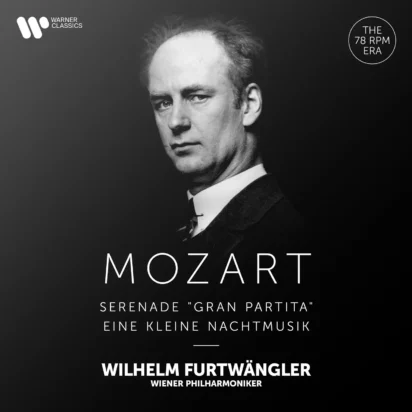
Serenade No. 13 in G Major, K. 525, universally known as Eine kleine Nachtmusik (“A Little Night Music”), is a 1787 composition for a chamber ensemble. It stands as one of the most famous, recognizable, and frequently performed pieces in all of classical music history. Four core movements: I. Allegro: A bright, energetic sonata-allegro movement that opens with the piece’s iconic, sweeping upward theme. II. Romanze (Andante): A lyrical, elegant, and graceful slow movement in C major that offers a tranquil contrast to the opening. III. Menuetto (Allegretto): A traditional, rhythmic courtly dance featuring a playful trio section. IV. Rondo (Allegro): A rapid, lively, and joyful finale built around a recurring principal theme that pushes to a spirited conclusion.
Serenade No. 10 in B-flat major, K. 361/370a, popularly known as the Gran Partita, is widely considered one of the greatest masterpieces of wind literature in Western classical music. Composed between 1781 and 1784 during Mozart’s early years in Vienna. The work is celebrated for its extraordinary scale, expressive depth, and sophisticated textures. the Gran Partita is structured as an expansive seven-movement suite: I. Largo – Molto allegro: A slow, regal introduction followed by a spirited, driving sonata-form movement. II. Menuetto: A courtly minuet framing two highly contrasting trio sections—the first spotlighting clarinets and basset horns, the second moving to a melancholic minor key. III. Adagio: The emotional crown of the serenade. It features a steady syncopated pulse over which the oboe, clarinet, and basset horn weave an overlapping tapestry of operatic melodies. IV. Menuetto (Allegretto): A second dance movement, starkly contrasting a lively staccato theme against rural and folksy trios. V. Romanze (Adagio – Allegretto – Adagio): A peaceful lyric movement that is dramatically interrupted by a dark, driving central section before returning to tranquillity. VI. Tema con variazioni (Andante): A lyrical theme introduced by the clarinet, followed by six intricate variations exploring different instrument pairings, a minor key, and shifts in tempo. VII. Finale (Molto allegro: A bright, exhilarating rondo that pushes the virtuosity of the entire ensemble to a joyful conclusion.
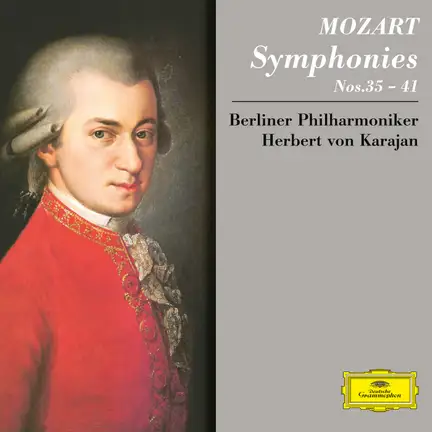
Symphony No. 39 in E-flat major, K. 543, is one of the pinnacle achievements of Mozart’s symphonic output. Completed 1788, Characterised by an overarching warmth, regal dignity, and distinctive orchestral colouring, Mozart omitted oboes from the woodwind section, replacing them with pairs of clarinets, in a prominent symphonic role. four movements, I. Adagio – Allegro: It opens with a majestic, slow introduction, full of tense anticipation. This gives way to a singing, triple-meter Allegro in sonata form. II. Andante con moto: A serene movement in A-flat major that starts peacefully but is interrupted by surprisingly stormy, passionate episodes. III. Menuetto. Allegretto: An energetic, bounding minuet spotlighting clarinets IV. Finale. Allegro: A display of high-speed energy operates like a perpetual motion piece where the secondary theme is actually just the opening theme cleverly disguised. Symphony No. 40 in G minor, K. 550, composed in 1788, is one of the most celebrated orchestral works in classical music history. four-movement classical structure, I. Molto allegro : Opens instantly without an introductory fanfare, plunging straight into a famous, urgent “sighing” motif played by the violins. II. Andante : A lyrical, introspective movement written in a contrasting E-flat major key, offering a brief emotional respite. III. Menuetto. Allegretto – Trio : subverts the traditional, elegant expectations of a classical minuet. Instead of a polite ballroom dance, the third movement delivers an intense, emotionally driving experience. IV. Finale. Allegro assai : An explosive, rapidly paced conclusion marked by dramatic emotional turbulence and a famously jarring 12-note chromatic. Symphony No. 41 in C major, K. 551, widely known as the Jupiter Symphony, is the final, longest, and most complex symphony composed in 1788, it represents the ultimate pinnacle of Classical orchestral music. Four Movements: I. Allegro vivace: Opens with bold, military-style orchestral gestures followed by soft, lyric responses. II. Andante cantabile: A deeply expressive movement in F major utilizing muted strings. It shifts between absolute serenity and sudden, troubled minor-key episodes.
III. Menuetto. Allegretto: A stately, flowing classical minuet featuring a playful, rhythmically witty trio section. IV. Molto allegro (The Finale): Famous for its legendary fugal coda. Mozart takes five separate musical themes and weaves them simultaneously in an astonishing display of counterpoint.
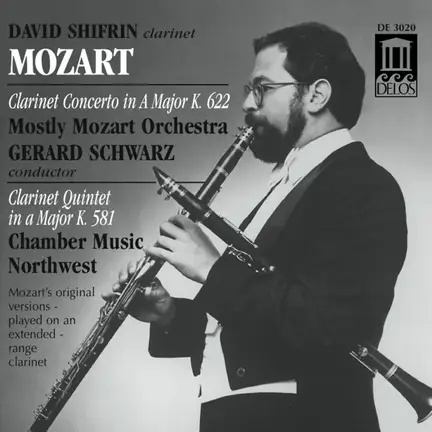
Clarinet Concerto in A major, K. 622, completed in 1791, is widely considered the greatest clarinet concerto ever written. Written just two months before his death, it represents the absolute pinnacle of his late, “autumnal” instrumental music. The concerto follows a traditional classical three-movement structure: I. Allegro (A major): An expansive movement filled with flowing melodies, II. Adagio (D major): Famous for its breathtakingly sublime, tender, and deeply emotional melody, III. Rondo: Allegro (A major): A spirited, lively, and rhythmically joyful finale that showcases the ultimate technical agility of the instrument.
Clarinet Quintet in A major, K. 581 (also known as the Stadler Quintet) is one of the most sublime and admired masterpieces. Completed in Vienna 1789, composed for a single clarinet combined with a standard string quartet (two violins, a viola, and a cello). follows a traditional four-movement classical structure: I. Allegro (A major): A beautifully balanced movement in sonata form where the clarinet and strings seamlessly share melodic phrasing as equals. II. Larghetto (D major): A deeply emotional, serene, vocal-like melody where the clarinet floats effortlessly over muted strings.
III. Menuetto (A major): A lively minuet featuring two distinct trio sections. Trio I is scored purely for the string quartet in a melancholy A minor, while Trio II brings back the clarinet in a rustic, Swiss-landler style dance. IV. Allegretto con Variazioni (A major): A playful and charming theme-and-variations finale that explores a wide range of moods, showing off the diverse tonal colors and agility of the clarinet.
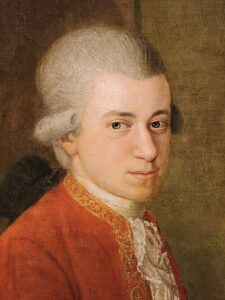
Mozart wrote in every major genre, including symphony, opera, the solo concerto, chamber music including string quartet and string quintet, and the piano sonata. These forms were not new, but Mozart advanced their technical sophistication and emotional reach. From his earliest years to his last, he composed a varied number of vocal works – concert arias, songs and canons. He almost single-handedly developed and popularised the Classical piano concerto. He wrote a great deal of religious music, including large-scale masses, as well as dances, divertimenti, serenades, and other forms of light entertainment
Wolfgang Amadeus Mozart was born on 27 January 1756 in Salzburg. He was the youngest of seven children, five of whom died in infancy. Mozart was baptised the day after his birth, at St. Rupert’s Cathedral in Salzburg. The baptismal record gives his name in Latinised form, as Joannes Chrysostomus Wolfgangus Theophilus Mozart. He generally called himself “Wolfgang Amadè Mozart” as an adult, but his name had many variants. While Wolfgang was young, his family made several European journeys in which he and his sister Nannerl performed as child prodigies. Most of the music Mozart wrote at this early stage of his career is little known today, but there is one exception: toward the end of the last Italian journey, Mozart wrote the solo motet Exsultate, jubilate, K.165; this work is a favourite for performance by sopranos today. After finally returning with his father from Italy on 13 March 1773, Mozart was employed as a court musician by the ruler of Salzburg, Prince-Archbishop Hieronymus Colloredo. The composer had many friends and admirers in Salzburg and had the opportunity to work in many genres, including symphonies, concertos, sonatas, string quartets, masses, serenades, and a few minor operas. An important part of Mozart’s output at this time was violin concertos: he wrote one in 1773 and four more in 1775. These are the only violin concertos he ever wrote, and through the series they increase in their musical sophistication. The last three—K. 216, K. 218, K. 219—are staples of the modern repertoire. In 1776 he turned his efforts to piano concertos, culminating in the E♭ concerto K. 271 of early 1777, considered by critics to be a breakthrough work. In August 1777 Mozart resigned his position at Salzburg. While Mozart was in Paris, his father was pursuing opportunities of employment for him in Salzburg. Among the better-known works which Mozart wrote on the Paris journey are the Piano Sonata No. 8, K. 310/300d, the Symphony No. 31 (Paris), and the Concerto for Flute and Harp in C major, K. 299/297c.Mozart finally returned to Salzburg on 15 January 1779 and took up his new appointment, but his discontent with Salzburg remained undiminished.
In 1782 Mozart was summoned to Vienna, where his employer, Archbishop Colloredo, was attending the celebrations for the accession of Joseph II to the Austrian throne. Mozart began to plan for a bigger career as he continued in the archbishop’s service. Mozart did indeed soon meet the emperor, who was to support his career substantially with commissions and a part-time position. After quarrels with the archbishop Mozart was dismissed, thus freeing himself both of his employer and of his father’s demands to return to Salzburg. Mozart’s resignation was a “revolutionary step” that significantly altered the course of his life. Mozart moved in with the Weber family and Mozart began a courtship of Constanze Weber. The couple were finally married on 4 August 1782 in St. Stephen’s Cathedral, the day before his father’s consenting letter arrived in the mail. The couple had six children, of whom only two survived infancies. In 1783 Mozart and his wife visited his family in Salzburg, for the first and only time after their marriage. It is possible that the visit was tense, since Leopold had been sharply opposed to the marriage, and Mozart’s sister Nannerl had evidently snubbed Constanze in correspondence. The visit prompted the composition of one of Mozart’s great liturgical pieces, the Mass in C minor K. 527. Though not completed, it was premiered in Salzburg, with Constanze singing a solo part. With substantial returns from his concerts and elsewhere, Mozart and his wife adopted a more luxurious lifestyle. Mozart did little operatic writing for the next four years, producing only two unfinished works and the one-act Der Schauspieldirektor. He focused instead on his career as a piano soloist and writer of concertos. Around the end of 1785, Mozart moved away from keyboard writing and began his famous operatic collaboration with the librettist Lorenzo Da Ponte. The year 1786 saw the successful premiere of Le Nozze di Figaro in Vienna. The success of Le Nozze di Figaro led to a commission for an opera to be performed by the resident opera company of Prague; the work thus spawned was Don Giovanni, Mozart’s second collaboration with Da Ponte.
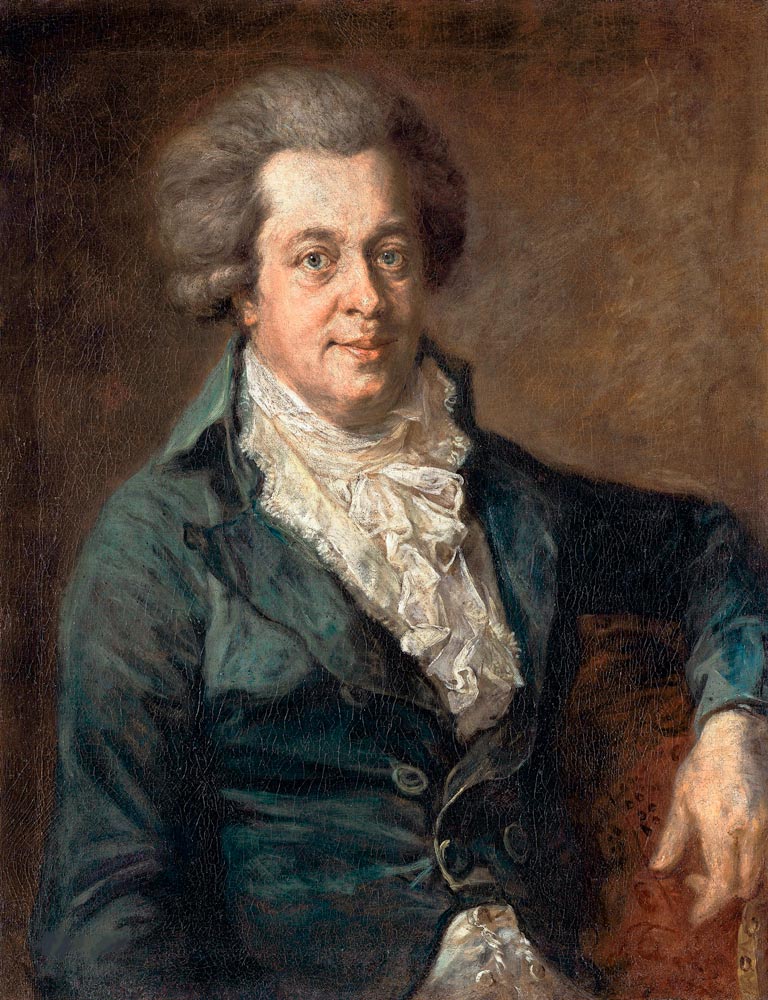
He composed more than 800 works across every musical genre of his time, including symphonies, operas, concertos, and chamber music. Renowned as the ultimate child prodigy, Mozart’s music is celebrated worldwide for its melodic beauty, structural elegance, and deep emotional expression.
In December 1787, Mozart finally obtained a steady post under aristocratic patronage. Emperor Joseph II appointed him as his “chamber composer”, a part-time appointment, paying just 800 florins per year, and required Mozart only to compose dances for the annual balls. This modest income became important to Mozart when hard times arrived. Toward the end of the decade, Mozart’s circumstances worsened. Around 1786, he ceased to appear frequently in public concerts, and his income shrank. Yet the production of works considered as high points of Mozart’s oeuvre continued, with work including the last three symphonies (Nos. 39, 40, and 41, all from the summer of 1788), the Clarinet Quintet of 1789, and the last of the three Da Ponte operas, Così fan tutte, premiered in 1790. Mozart’s last year was, until his final illness struck, a time of high productivity. He composed a great deal, including some of his most admired works: the opera Die Zauberflöte; his last piano concerto (No. 27 K. 595); the Clarinet Concerto K. 622; the last in his series of string quintets (K. 614 in E♭); the motet Ave verum corpus K. 618; and the unfinished Requiem K. 626. Mozart fell seriously ill on 20 November 1791, and took to (what turned out to be) his deathbed; he suffered from swelling, pain, and vomiting. Mozart was nursed in his final days by his wife and her younger sister Sophie and was attended by the family doctor, Thomas Franz Closset. By Sophie’s testimony Mozart spent some of his final hours in conversation with his student and friend Süssmayr, discussing the problem of getting his Requiem completed.
Sound quality is important and the better online Streaming services will offer superior sound quality. As always, We do encourage you to purchase Favoured albums from good online or High street record stores.
Artists in upcoming issues: Richard strauss, , Brahms and Liszt......Keep Listening!! JOIN THE CONVERSATION...
“Comments are most welcome and appreciated”