contemporary Music – issue #8 – folk / Country rock
Folk rock is a popular music genre that emerged in the mid-1960s, primarily in the U.S. and UK, by blending the acoustic, lyrical, and melodic elements of folk music with the electric instrumentation, rhythm, and energy of rock & roll. It often features close vocal harmonies, poignant songwriting, and jangly guitars.
The American folk-music revival began during the 1940s; building on the interest in protest folk singers such as Woody Guthrie and Pete Seeger, it reached a peak in popularity in the mid-1960s with artists such as Bob Dylan and Joan Baez: The Byrds are credited with creating the genre’s “jangle” sound, particularly with their 1965 cover of Bob Dylan’s “Mr. Tambourine Man”. Dylan himself popularized the genre by “going electric” at the 1965 Newport Folk Festival. Besides Dylan and The Byrds, notable artists include Crosby, Stills, Nash & Young, Buffalo Springfield, Simon & Garfunkel, and The Band.In the UK, bands like Fairport Convention and Steeleye Span developed a distinct sound by electrifying traditional British folk tunes. Common instruments include acoustic and electric guitars, mandolin, banjo, and fiddle. In the United States folk rock acts personified a generalized, often self-righteous youthful rebellion that in its more pointed songs was labelled “protest” music. In Britain folk rock tended to be more respectful of tradition and combined centuries-old folk material with original, tradition-flavoured songs arranged for folk rock ensembles that often used old instruments to maintain a strong Celtic flavour. While the folk rock movement began and quickly surged in the 1960s, it has continued through the present day. It has spawned many offshoots, including psychedelic folk rock (Jefferson Airplane), country rock (the Flying Burrito Brothers, John Prine), progressive folk music (Richard Thompson, O’Death), punk-inspired folk rock (the Replacements, Dinosaur Jr., Buffalo Tom), and even folk metal (Skyclad, Moonsorrow). The annual Newport Folk Festival brings disparate folk acts together highlighting the wide array of songwriting and performance styles in today’s folk rock music.
Join the Conversation!!!
we will Feature Up to 4 Albums from Artists representative of a range of the Many sub-genres. We Hope to encourage Listeners of all tastes and passions. So Get your Headphones on and Consider discussing the musical Offering and sharing your views with like-minded peers.
In Issue #8, we feature the grateful dead
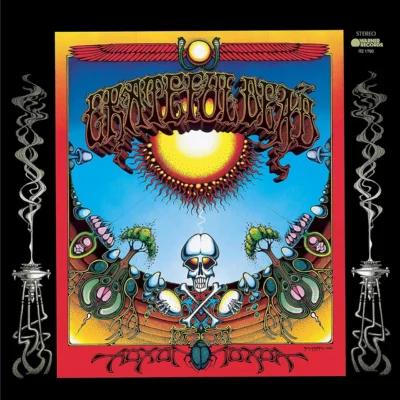
Aoxomoxoa is the third studio album released in June 1969, by Warner Bros.-Seven Arts. It is widely celebrated as the ultimate pinnacle of the band’s experimental, psychedelic rock era. The title itself is a meaningless palindrome. This project was the first time Jerry Garcia took over all the lead vocal duties. The early glimpses of the Hunter/Garcia partnership that come through on the bluegrass-inflected “Dupree’s Diamond Blues” or the mellow ballad “Rosemary” foreshadowed the complete shift to gentle Americana on the masterful Workingman’s Dead. The album was entirely self-produced by the band, leading to experimental studio tracking which could sometimes obscure the musical ideas, as distorted vocals clashed with acoustic instruments or multiple drum tracks ping-ponged across the stereo field. The eight-minute epic “What’s Become of the Baby” was the most glaring example of the album’s ungrounded production aesthetic, reaching an almost musique concrète level of weirdness with random electronic sounds and choppy effects swarming on Garcia’s isolated vocal tracks.
Not without its excellent moments, the album is more a document of late-’60s studio experimentation than a huge step in any sustained path for the band.
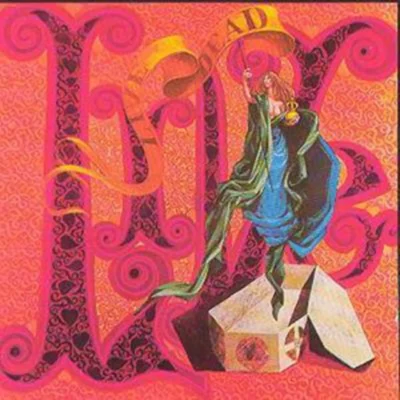
Live/Dead is the first official live album (and fourth overall). It is widely celebrated as a landmark release in the psychedelic rock and jam-band genres. Tracks include: “Dark Star” (23:18) – A legendary, side-long avant-garde spacewalk that serves as the definitive version of the band’s ultimate improvisational vehicle. “St. Stephen” (6:31) – A hard-driving, psychedelic fan-favourite seamlessly transitioning from Dark Star. “The Eleven” (9:18) – Named for its complex 11/8-time signature, showcasing a musical performance where the musicians play together so perfectly that it seems like they are reading each other’s minds. “Turn On Your Love Light” (15:05) – A bluesy R&B rave-up featuring Ron “Pigpen” McKernan’s soulful crowd-exhorting routine. “Death Don’t Have No Mercy” (10:28) – An electrified, slow-burning cover of the Reverend Gary Davis blues standard. “Feedback” (7:49) – An experimental, avant-garde wall of sonic distortion and speaker manipulation. “And We Bid You Goodnight” (0:35) – A brief, traditional Bahamian a cappella lullaby sung by the entire band to close the night.
captured primarily during a series of shows at San Francisco’s Fillmore West in early 1969. the first live rock album recorded using 16-track technology, Having 16 individual tracks meant engineers could adjust the volume, add effects, and properly balance each instrument, vocal, and the audience noise separately during the final studio mixing process.The tracks were sequenced intentionally by the band to emulate the natural, uninterrupted flow of a single, continuous concert set.
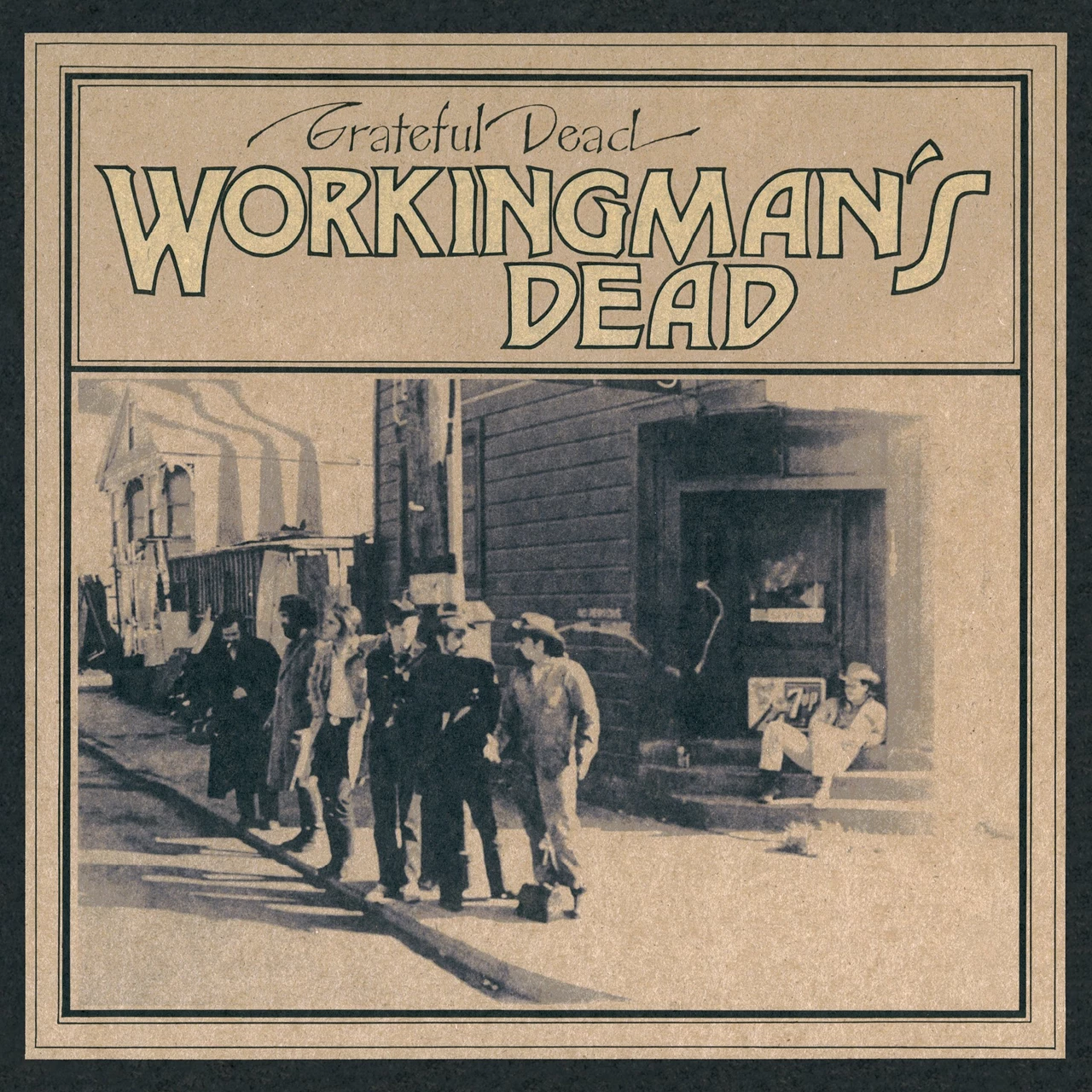
Workingman’s Dead is the fourth studio album released in June 1970. the album marked a massive turning point for the band, as they stepped away from psychedelic experimentation in favour of rootsy Americana, folk, and country rock. Almost all tracks were written by guitarist Jerry Garcia and lyricist Robert Hunter. It was the band’s first album to sell a million copies. Featuring eight cohesive tracks: “Uncle John’s Band” – The album’s commercial breakthrough and an anthem of love and unity. “High Time” – A slow, heart-wrenching country ballad showcasing Garcia’s pedal steel guitar. “Dire Wolf” – A bouncy folk song with a dark, timeless lyrical theme. “New Speedway Boogie” – Written as a direct response to the tragic events at the 1969 Altamont Free Concert. “Cumberland Blues” – A high-energy bluegrass-rock blend about the struggles of a working miner. “Black Peter” – A slow, gritty blues track reflecting on mortality. “Easy Wind” – A blues-shuffled track featuring lead vocals by Ron “Pigpen” McKernan. “Casey Jones” – The driving, famous closer about a cocaine-fuelled train engineer.
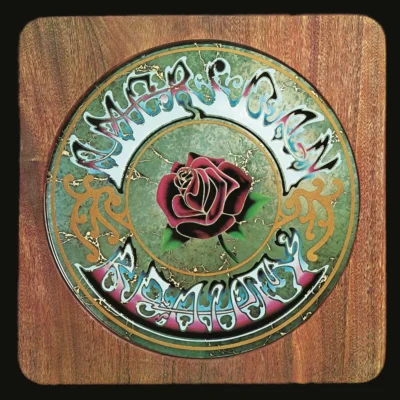
American Beauty is the sixth studio album released in November 1970 and is widely celebrated for its warm, acoustic-driven folk – country rock, and Americana sound, featuring some of the band’s most enduring radio classics and tight vocal harmonies. Continuing the shift toward roots music and bluegrass. Guests included legendary mandolinist David Grisman played on “Ripple” and “Friend of the Devil”, while Howard Wales played keyboard on “Truckin”. The album also highlights the opening up the songwriting process to allow other members of the band to put forward their own work, resulting in Lesh’s ‘Box of Rain’, Weir’s ‘Sugar Magnolia’, and Pigpen’s ‘Operator’ . American Beauty contains some of the Dead’s most highly regarded material, its songs reflecting both the turmoil of the band’s professional life and the wider sense of confusion following the sharp decline of the ‘60s social revolution. For example, ‘Box of Rain’, written by Hunter in collaboration with Lesh, deals with the latter’s father’s losing battle with cancer. The particularly poetic ‘Ripple’, muses on the relationship between writer, performer and listener, underlining music’s ability to offer guidance and comfort in times of stress and loneliness. The meandering tone of the music, written by Garcia and featuring the tremulous swell of Grisman’s mandolin, evokes the timeless image of the open American highway, carrying its passengers from one state to another. ‘Friend of the Devil’ plays with gothic outlaw iconography to express the idea that, try as you might, that same road won’t help you outrun your demons for long.
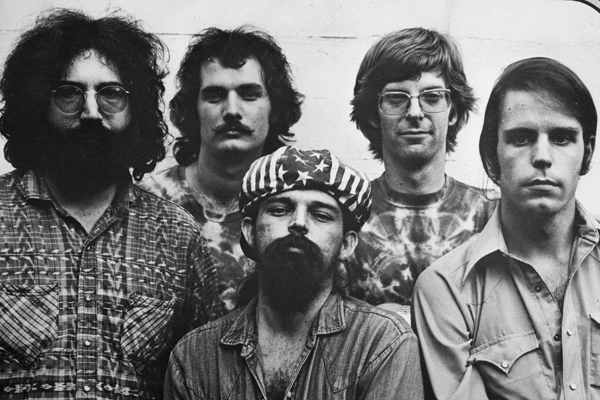
The Grateful Dead was an American rock band formed in Palo Alto, California, in 1965. Known for their eclectic style that fused elements of rock, blues, jazz, folk, country, bluegrass, rock and roll, gospel, reggae, and world music with psychedelia, the band is famous for improvisation during their live performances, and for their devoted fan base, known as “Deadheads”. According to the musician and writer Lenny Kaye, the music of the Grateful Dead “touches on ground that most other groups don’t even know exists”. For the range of their influences and the structure of their live performances, the Grateful Dead are considered “the pioneering godfathers of the jam band world”.
The Grateful Dead was founded in the San Francisco Bay Area during the rise of the counterculture of the 1960s. The band’s founding members were Jerry Garcia (lead guitar and vocals), Bob Weir (rhythm guitar and vocals), Phil Lesh (bass guitar and vocals), Bill Kreutzmann (drums), and Ron “Pigpen” McKernan (keyboards, harmonica, and vocals). With the exception of Pigpen, who died in 1973, the remaining founding members stayed with the band until their 1995 split. The first show under the name Grateful Dead was in San Jose on December 4, 1965, at one of Ken Kesey’s Acid Tests. Scholar Michael Kaler has written that the Dead’s participation in the Acid Tests was crucial both to the development of their improvisational vocabulary and to their bonding as a band, with the group having set out to foster an intra-band musical telepathy. The Grateful Dead played at the Trips Festival in 1966, a three-day psychedelic rock weekend party and event produced by Ken Kesey, Stewart Brand, and Ramon Sender, that, in conjunction with the Merry Pranksters, brought the nascent hippie movement together for the first time. Owsley Stanley, the “Acid King” whose LSD supplied the Acid Tests and in early 1966, became the band’s financial backer, renting them a house on the fringes of Watts, Los Angeles, and buying them sound equipment.
One of the group’s earliest major performances in 1967 was a musical event held at the Avalon Ballroom by the San Francisco Hare Krishna temple. The Grateful Dead performed at the event along with the Hare Krishna founder Bhaktivedanta Swami, poet Allen Ginsberg, bands Moby Grape and Big Brother and the Holding Company with Janis Joplin, donating proceeds to the temple.The band’s first LP, The Grateful Dead, was released on Warner Brothers in 1967. Classically trained trumpeter Phil Lesh performed on bass guitar. Bob Weir, the youngest original member of the group, played rhythm guitar. Ron “Pigpen” McKernan played keyboards, percussion, and harmonica until shortly before his death in 1973 at the age of 27.Garcia, Weir, and McKernan shared the lead vocal duties more or less equally; Lesh sang only a few leads, but his tenor was a key part of the band’s three-part vocal harmonies. Bill Kreutzmann played drums, and in September 1967 was joined by a second drummer, New York City native Mickey Hart, who also played a wide variety of other percussion instruments. On May 3, 1968, the band played a free concert at Columbia University during the anti–Vietnam War student protests during which students occupied several campus buildings. In order to play, the band, equipment and all, had to be “smuggled” on campus in the back of a bread delivery truck.
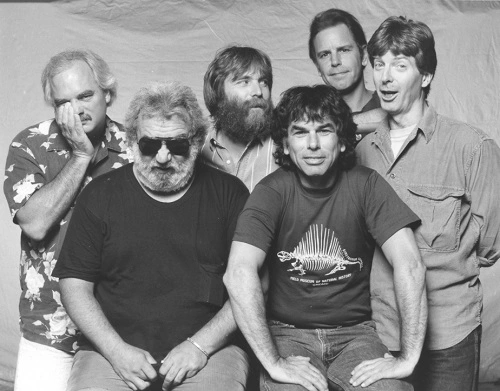
Grateful Dead have been called a “symbol of the counterculture movement of the sixties”.The cultural, musical, and technological legacy of the Grateful Dead is widely considered one of the most influential and enduring forces in American rock history. Their approach arguably pioneered the modern concepts of fandom, community-driven subcultures, and live concert production. Their enduring historical impact has been officially cemented through induction into the Rock and Roll Hall of Fame, additions to the Library of Congress National Recording Registry, and a prestigious Kennedy Center Honor
Tom “TC” Constanten was added as a second keyboardist from 1968 to 1970, to help Pigpen keep up with an increasingly psychedelic sound, while Pigpen transitioned into playing various percussion instruments and vocals. Robert Hunter and John Perry Barlow were the band’s primary lyricists, starting in 1967 and 1971, respectively, and continuing until the band’s dissolution. Hart took time off from the band in February 1971, after his father, an accountant, absconded with much of the band’s money; Kreutzmann was once again the sole percussionist, until Hart rejoined the Grateful Dead for good in October 1974.After Constanten’s departure, Pigpen reclaimed his position as sole keyboardist. Less than a year later, in late 1971, Pigpen was joined by another keyboardist, Keith Godchaux, who played grand piano alongside Pigpen’s Hammond B-3 organ. In early 1972, Keith’s wife, Donna Jean Godchaux, joined the Grateful Dead as a backing vocalist. Following the Grateful Dead’s “Europe ’72” tour, Pigpen’s health had deteriorated to the point that he could no longer tour with the band. His final concert appearance was June 17, 1972, at the Hollywood Bowl, in Los Angeles; he died on March 8, 1973, of complications from liver damage. Pigpen’s death did not slow down the Grateful Dead. With the help of manager Ron Rakow, the band soon formed its own record label, Grateful Dead Records. Later that year, it released its next studio album, the jazz-influenced Wake of the Flood, which became their biggest commercial success thus far. Meanwhile, capitalizing on the album’s success, the band soon went back to the studio, and in June 1974 released another album, From the Mars Hotel. Not long after, the Dead decided to take a hiatus from live touring. In September 1975, the Dead released their eighth studio album, Blues for Allah. The band resumed touring in June 1976, playing multiple dates in small theatres, rather than the stadium.That same year, they signed with Arista Records, and the new contract produced Terrapin Station in July 1977. Keith and Donna Jean Godchaux left the band in February 1979, citing artistic differences. Following the Godchauxs’ departure, Brent Mydland joined as keyboardist and vocalist and was considered “the perfect fit”. Shortly after Mydland found his place in the early 1980s, Garcia’s health began to decline. Garcia slipped into a diabetic coma for several days in July 1986, leading to the cancellation of all concerts in the fall of that year. Garcia recovered, and the band released In the Dark in July 1987, which became its best-selling studio album. Also, that year, the group toured with Bob Dylan, as heard on the album Dylan & the Dead. Mydland died in July 1990 and Vince Welnick, former keyboardist for the Tubes, joined as a band member, while Bruce Hornsby, who had a successful career with his band the Range, joined temporarily as a bridge to help Welnick learn songs. Both performed on keyboards and vocals—Welnick until the band’s end, and Hornsby mainly from 1990 to 1992. The Grateful Dead performed its final concert on July 9, 1995, at Soldier Field in Chicago. Jerry Garcia died on August 9, 1995. A few months after Garcia’s death, the remaining members of the Grateful Dead decided to disband. Since that time, there have been a number of reunions by the surviving members involving various combinations of musicians. Additionally, the former members have also begun or continued individual projects. In 2015, Weir, Lesh, Kreutzmann, and Hart reunited for five concerts called “Fare Thee Well: Celebrating 50 Years of the Grateful Dead” Barlow died in 2018 and Hunter in 2019. Lesh died in 2024. Donna Jean Godchaux died in November 2025. Weir died in January 2026, leaving Kreutzmann as the last surviving member of the Grateful Dead’s original lineup.
Sound quality is important and the better online Streaming services will offer superior sound quality. As always, We do encourage you to purchase Favoured albums from good online or High street record stores. the Grateful Dead label: - Warner Bros.-Seven Arts
Artists in upcoming issues: Fleet Foxes, Mumford & Sons, joni Mitchell, Paul Simon....Keep Listening!! JOIN THE CONVERSATION...
“Comments are most welcome and appreciated”