
Early pioneers like Grandmaster Flash and DJ Grand Wizard Theodore developed key techniques such as scratching and looping “break beats”—instrumental sections of songs that people could dance to. The core elements of rap include: Content: The lyrics, which often incorporate “street vernacular” and address a wide range of social and political issues, such as racism and poverty.Flow: The rhythm and rhyme scheme of the delivery. Delivery: The cadence, tone, and vocal qualities used by the rapper (MC). The Beat: The instrumental accompaniment, typically created by a DJ or producer using turntables, samplers, drum machines (like the iconic 808 drum machine), and synthesizers. Sampling and the evolution of rap and hip hop go hand in hand. Essentially, this comes down to combining old classics with contemporary sounds. Rap music has deep cultural roots and several precursors: The tradition of rhythmic storytelling by West African griots over drums is often cited as an early precursor; African American Traditions Influences blues and jazz vocal styles; Jamaican Toasting (or Deejaying) A Rhythmic Chanting or Talking Style Performed over a Beat; “playing the dozens,” a verbal game where participants exchange witty insults about each other’s family to demonstrate verbal skill and coolness without getting genuinely angry, evolving into ‘battle rap.’ and 1960s African American poetry and spoken word artists like The Last Poets and Gil Scott-Heron. Changes to the musical production of hip-hop, along with growing stylistic diversity and advances in technology, led to the community-imposed concept of an old and new school. The “Old School” is associated with the period from the early 1970s to the mid-1980s.Rap gained commercial viability in 1979 with The Sugarhill Gang’s “Rapper’s Delight” and later with artists like Kurtis Blow. “New School” rap was coined by the 2nd generation artist (1984) to distinguish the pop sensibilities of the first commercial generation of rap artists and ranged from the pop-oriented humorous style of the Fat Boys, for example, to the rock-oriented sounds of say, Run-D.M.C. Women rappers like Queen Latifah introduced Black women’s point of view to rap fans and proved that they were as skilled and commercially successful as the men.
contemporary Music – Rap – issue #5
Rap music is stylistically and lyrically diverse, representing a range of experiences and worldviews. originating in the Bronx, New York City, in the early 1970s. It features rhythmic, rhyming speech delivered over a musical backdrop, known as a beat or instrumental track. Its earliest performers comprise MCs (derived from master of ceremonies but referring to the actual rapper) and DJs (who use and often manipulate pre-recorded tracks as a backdrop to the rap), break dancers and graffiti writers. Rap music is a musical form of vocal delivery that is a primary component of hip-hop culture.
The chaotic sounds of Public Enemy and N.W.A became known as hardcore. The harsh lyrical content mirrored the deteriorating conditions of the inner-cities and pushed the boundaries of lyrical complexity and social commentary. also known as “conscious” rap and a sub-genre “gangsta” rap characterized by its lyrical focus on the often-violent realities of inner-city life, including crime, gang activity, and drug dealing. In the 2000s, hip-hop music was mainstream. Kanye West’s production and lyricism redirected attention away from gangsta rap and explored a range of topics including his middle-class upbringing, anti-Black racism, corporatism, and his faith presented in full ‘boasting’ style. additionally, Eminem will become a most revered lyricist, by rap artists and rap fans alike. Encouraging white artists to Foster relationships with people of colour and follow their lead in dismantling oppressive systems. a legacy of Vanilla Ice the first solo white rapper to achieve commercial success in 1990. Musically, music-making turned away from the East Coast and the West coast and found a new home in the South. Several epicentres develop influential styles: Miami (Miami bass), New Orleans (bounce), Houston (screwed), and Atlanta (crunk and trap). By the 2010s, socially conscious rap will cross over into the mainstream as R&B and rap artists respond to tension borne from increased police and vigilante shootings of unarmed Black men, women, and children, and from advances in technology for self-production and instant sharing through social media. Key artists include Kendrick Lamar. In the 2010s we witness the rise of female MCs as producers of critically acclaimed albums. Women leading the trend include Nicky Minaj and Cardi B. By the 21st century, rap had become a global phenomenon, influencing music, fashion, and culture worldwide. Fame in rap often comes with mainstream success and cultural impact, and few have shaped culture like Jay-Z. From his fluid rhymes about hustle and heartache to becoming a mogul in music and business, his influence spans beyond music charts to fashion and social activism.
Join the Conversation!!!
we will Feature Up to 4 Albums from Artists representative of a range of the Many sub-genres. We Hope to encourage Listeners of all tastes and passions. So Get your Headphones on and Consider discussing the musical Offering and sharing your views with like-minded peers.
In Issue #5, we feature the Streets ( mike Skinner)
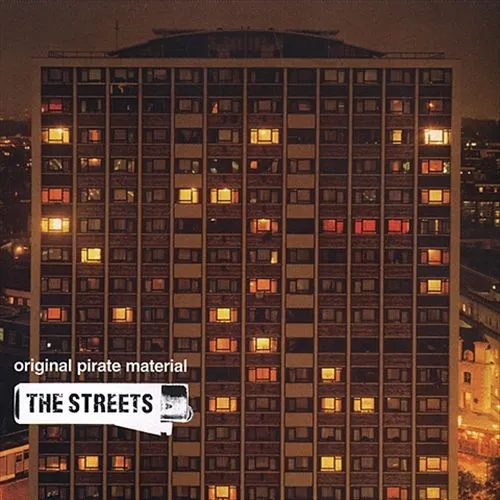
Original Pirate Material is the debut studio album released in 2002. Mike Skinner has created an album so real, so passionate, so moving, so funny, that it’s gone and defined a generation. Recorded mostly in a room in a south London house rented at the time. The instrumental tracks were created on an IBM ThinkPad, while Skinner used an emptied-out wardrobe as a vocal booth using duvets and mattresses to reduce echo. The album is musically influenced by American hip-hop, and perfectly captured working-class youth culture with lo-fi UK garage beats and hyper-local lyricism. The album received widespread critical acclaim, with many reviewers praising the originality and humour of Skinner’s lyrics, and subsequent critics’ polls have placed it among the best albums of the 2000s. The album comprises 14 tracks that blend clever storytelling with sharp, humorous social observations: “Has It Come to This?”: The breakthrough lead single that defined the project’s sound. “Let’s Push Things Forward”: A horn-inflected anthem featuring a call-to-arms to move past stale musical clichés. “Weak Become Heroes”: A poignant, piano-driven tribute to the unifying, euphoric peak of early-2000s rave culture. “Don’t Mug Yourself”: A comedic, fast-paced dialogue tracking the relatable anxieties of day-to-day British street life over pub culture and greasy food. “The Irony of It All”: A satirical, spoken-word confrontation between “Terry,” an aggressive, lager-drinking lout, and “Tim,” a mild-mannered, tea-drinking student weed enthusiast.
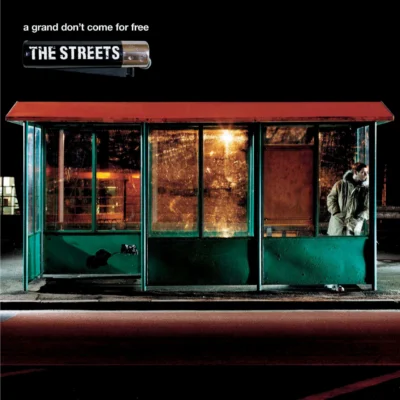
Grand Don’t Come for Free is the second studio album released on 17 May 2004 and is listed in the book 1001 Albums You Must Hear Before You Die. It is a rap opera and concept album that follows the story of its protagonist’s relationship with a girl named Simone, alongside the mysterious loss of £1,000 from his home (the eponymous “grand”). Skinner believes “Every song needs a drama at the centre of it, and once you have the drama, the song writes itself”. The behaviour of the main character / narrator can be questionable at times. We are told of his world view early on, believing that he deserves true friends that are on his side; but by the album’s end he sees things are more complex than that. The more optimistic ending sees him with fewer mates and no girlfriend, but an appreciation that everyone else has their own issues. With that, he gains a better outlook and the money that he had lost. Critical response for the album, like for his previous album, was near universally positive. The opening track “It Was Supposed to Be So Easy” shows us a day in the life of Skinner’s narrator; failing at the most mundane of tasks and setting up the hook of the album: the missing “grand”. Throughout the album we see the beginning of the relationship (“Could Well Be In”), the courtship (“Wouldn’t Have It Any Other Way”), the inevitable breakdown (“Get Out of My House”) and the fallout (“Dry Your Eyes”). Other songs flesh out Skinner’s role and his own failings (“Fit But You Know It”, “Such A Twat”) before finally he ends up having to come to a choice of reacting to events in two ways (“Empty Cans”). The standout track is the number one single “Dry Your Eyes”, which is vivid in describing the process of the immediate fallout of being dumped.
Computers and Blues is the fifth studio released in February 2011 through Atlantic Records, it was originally intended to be the final studio album under The Streets moniker. The album blends electronic beats with Skinner’s trademark conversational, introspective lyrical themes, exploring technology, ageing, and modern relationship dynamics. Notable guest vocals include Robert Harvey (lead singer of the indie rock band The Music), Clare Maguire, and Laura Vane. Notable tracks include: ‘Puzzled By People’, a song about contrasting human behaviour and crosswords is full of intelligent, clever wordplay. “Going Through Hell” is certainly an unexpected tune, however, the chorus, provided by Rob Harvey, will divide opinion. Whilst Harvey’s influence on the track itself is no bad thing, a rockier edge lending a new side to Skinner’s work, the transition from Skinner’s stylised, accented rapping to Harvey’s piercing, nasal caterwauling is a traumatic one. Then there is the upbeat “OMG”, where Skinner hits his old groove and storytelling prowess via the medium of Facebook. It’s a reminder that he knows how to tell a slice of life that a listener can relate to, and allows them to create a wider image than the lyrics describe. You can perfectly visualise the transition from wayward youth to mature adult in the touching ‘Blip on a Screen’ where Skinner ruminates on his upcoming fatherhood. And with a clear nod towards modern beats and tastes, he ramps up the soul vocal samples to add colour behind his idiosyncratic mumblings (Clare Maguire and Robert Harvey assisting in this capacity). As is customary for a Streets album, the start absolutely smacks it. Outside Inside is a deranged shuffle replete with analogue bleeps The melancholic closing track is “Lock the Locks” which fades in from the end of ‘Trust Me’, and reveals itself to be something of a teary, sorrowful goodbye, a marvellous slab of industrial soul, and includes a smoky Clare Maguire vocal.
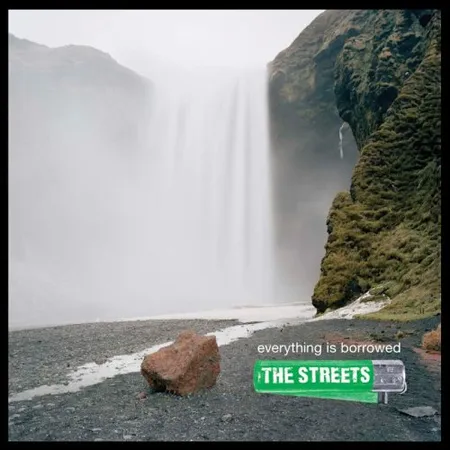
Everything Is Borrowed (2008) A notable stylistic shift that traded gritty urban realism for a more peaceful, philosophical, and acoustic-led sound. While it divided fans, it is highly regarded for its positive and mature outlook. Skinner moves away from the toxic celebrity hedonism of his previous album, The Hardest Way to Make an Easy Living, to focus on existential peace, morality, and simple joys. A positive musical evolution. By ditching standard electronic garage samples in favour of live strings, pianos, and harps, Skinner created a warmer, more organic backdrop. Ultimately, if you enjoy Skinner’s deadpan, poetic wit applied to lighter, existential concepts with a live-band backing, it is considered a hidden gem. However, if you are looking for the raw, high-energy UK garage beats of his early career, this record may feel a bit slow and overly polished. Notable tracks: “The Escapist” brings together the themes of the album and works to a grand finale. Skinner knows how to end an album and build to a suitable climax that does leave the album lingering in the memory. “Heaven for the Weather” takes on a gospel vibe, with an upbeat piano-driven refrain that absolutely must be sung along with. Skinner smoothly goes from the sinister swing of “I Love You More (Than You Like Me)” to the dirty guitar skronking in “The Way of the Dodo” to the pensive strings in “On the Flip of a Coin” and then a stirringly soulful piano/strings combo bringing to life a true gem in “On the Edge of a Cliff.” A small story where Skinner contemplates taking his life by jumping off a cliff, but gets told sage advice in the chorus. He particularly lets his guard down for the “The Strongest Person I Know,” a song with soft acoustic guitar, lilting piano, and no percussion at all. By no means is Skinner a perfect vocalist, but any missed notes are more endearing rather than grating.

The Streets is a pioneering English music project led by vocalist, producer, and multi-instrumentalist Mike Skinner. Mike Skinner was the first to prove that a British rapper could speak directly to the nation in a voice entirely his own. Emerging in the early 2000s, the project revolutionized the UK music scene by blending UK garage, hip-hop, 2-step, and grime with raw, spoken-word social commentary. Skinner’s hyper-detailed lyrical storytelling captures the nuances of working-class British life, ranging from everyday club nights to relationships and financial struggles.
Michael Geoffrey Skinner (born 27 November 1978) is an English rapper, singer-songwriter, musician, and record producer. Best known for the music project The Streets, Skinner was born in Barnet, north London, and grew up in West Heath, Birmingham. He started playing with keyboards at the tender age of five. When he was seven years old, he began experiencing symptoms of epilepsy, which worsened in his early teens. He began writing hip-hop and garage music in his home in West Heath and later built a sound booth in his bedroom, using a cupboard and a mattress. He describes his background as “Barratt class: suburban estates, not poor but not much money about, really boring”. At age 19, Skinner moved to Australia with his girlfriend; after the relationship ended Skinner stayed in Australia for a year. Upon his return to the United Kingdom, Skinner moved to south London. He sent a demo tape of an early version of what would become the song “Has It Come to This?” to a record shop run by A&R Nick Worthington. The song was released as a single in 2001, through Locked On Records. The Streets’ debut album, Original Pirate Material, was released in March 2002. The album was successful both with critics and the general public. In the UK, the album was nominated for the Mercury Prize. and nominated for British Album of the Year. Subsequent singles from Original Pirate Material include “Don’t Mug Yourself”, “Weak Become Heroes” and “Let’s Push Things Forward”. In May 2004, Skinner released the single “Fit but You Know It”, later used as part of the soundtrack for its video game FIFA Football 2005. It appeared on The Streets’ second album; A Grand Don’t Come for Free. The album’s second single, “Dry Your Eyes”, debuted at the top of the chart in the UK “Blinded by the Lights”, the third single, peaked at number 10 on the UK Singles Chart in 2004. The Streets’ third studio album, The Hardest Way to Make an Easy Living, was released on 10 April 2006. In the UK it debuted the album chart at number one. In September 2008, The Streets released their fourth studio album, Everything Is Borrowed. In a posting on his Myspace blog, Skinner noted that the group’s upcoming LP would contain “peaceful, positive vibes” in comparison with 2006’s “weird guilt-ridden indulgence” that was The Hardest Way To Make An Easy Living.
The fifth album Computers and Blues was released in February 2011, the first single being “Going Through Hell”. In November 2010, Skinner had announced on the official The Streets website, that he would release what he referred to as a mixtape album called Cyberspace and Reds, consisting of various recordings he had made since he had finished work on the final Streets album. Initially only for download via the Streets iPhone app. Later a so-called “deluxe” edition was made available for general download through the Streets website. In January 2011, Skinner’s management announced that Skinner will no longer perform as The Streets, he revived the project in December 2017. In October 2023, the first studio album in twelve years, The Darker the Shadow the Brighter the Light, was released. Mike Skinner is currently touring extensively with his pioneering UK garage project, The Streets, and playing live club DJ sets. He continues to write and release new music, recently putting out a mix album for the Fabric compilation series and dropping new tracks like “No Better Than Chance” blending his signature rapping, kind of, but really more like talking with dancefloor-ready synths. In 2025, Mike Skinner dropped a meditative new single titled “Utopia”.an existential new track that explores the inherent impossibility of perfection.
When playing live, Skinner is joined by Kevin Mark Trail on backing vocals, Johnny Drum Machine on drums, Wayne Fibes on guitar and bass, Chris Brown on keyboards and Magic Mike on samplers.
Skinner is best known for his lyricism matched with his blurring of musical styles of UK garage, hip-hop, indie rock, reggae, and ska. The Guardian reviewer Dave Simpson particularly praised Skinner’s “dazzling wordplay”
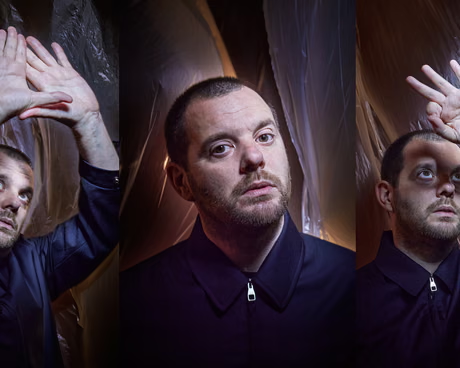
Mike Skinner is the man behind the musical phenomenon that was The Streets for ten years. In that time he won an Ivor Novello, a Brit, and changed the sound of UK music forever. Now that he has retired the moniker of The Streets, Mike continues to push things forward with his genre bending DJ sets. Reflecting his love of cutting edge sounds, Mike’s musical selections are as eclectic as his production capabilities. From screwed down house to old skool hip hop via drum and bass bangers and peppered with his own, up the minute refixes, and classic tracks, Skinner never fails to ignite the party spirit.
Sound quality is important and the better online Streaming services will offer superior sound quality. As always, We do encourage you to purchase Favoured albums from good online or High street record stores.
Artists in upcoming issues: nicki Minaj, kano, Little simz .....Keep Listening!! JOIN THE CONVERSATION...
“Comments are most welcome and appreciated”