
rock Music – issue #13
Rock music’s history is glorious. But who are it’s greatest rock bands and artists?
Over the years Many Disparate rock music sub-genres have emerged. hybrids like blues rock, folk rock, country rock, Progressive Rock, Psychedelic Rock, Glam Rock, Heavy Metal, Punk, Electronic, Etc. Have their Fans and Critics. From the ’90s alternative Rock achieves dominance. New genres, like grunge, Britpop, Hip Hop and indie Rock enter the mainstream. each with their own Unique Characteristics, Style, and Cultural Significance. Rock music has long been linked with political activism. Together with changes in social attitudes to race, sex, and drug use. Rock Music has assimilated cultural and social Movements – mods, rockers, Punks and the hippie movement for Example. the music both reflects society and influences society.
The evolution of Rock Music has been inextricably linked to technological advancements. from the invention of the electric guitar to the rise of digital streaming platforms. Thus Music became ubiquitous, whether in public places or in the home.
Music is a form of human conversation
Music Remains deeply personal, We hope to Highlight albums that evoke images, memories, and emotions to spark debate and
Broaden your Horizons, step out of Your comfort zone and expand your music taste and experiences.
Join the Conversation!!!
we will Feature Up to 4 Albums from Artists representative of a range of the Many sub-genres. We Hope to encourage Listeners of all tastes and passions. So Get your Headphones on and Consider discussing the musical Offering and sharing your views with like-minded peers.
in issue #13, we feature the Stranglers
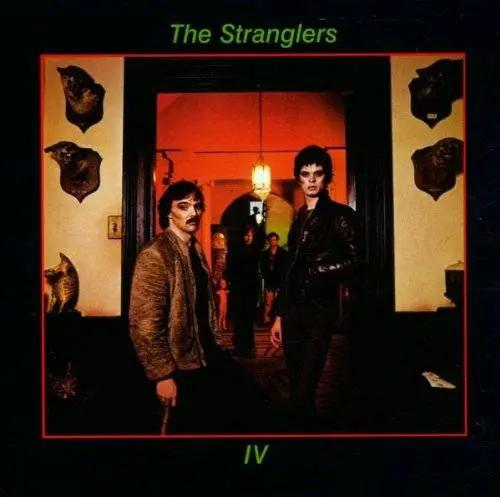
Rattus Norvegicus (1977): Their explosive debut album remains one of the highest-selling and most celebrated releases of the UK punk era. They had the unfashionable ability to play rather well but also to display their 60s roots; not least in the swirling keyboards of Greenfield, who obviously took his inspiration from The Doors’ Ray Manzarek. it features the foundational tracks “Peaches”, “Hanging Around”, and “(Get A) Grip (On Yourself)” Burnel epitomizes punk with his nasty bass and nastier vocals. Dave Greenfield’s keyboards are so garishly out of place as to shock the senses. It’s a strange mix, a real car crash between psychedelia and punk. It is a really interesting record, if rough around the edges. this debut, produced by Martin Rushent, goes out of its way to be brutish, reflecting their live appeal.
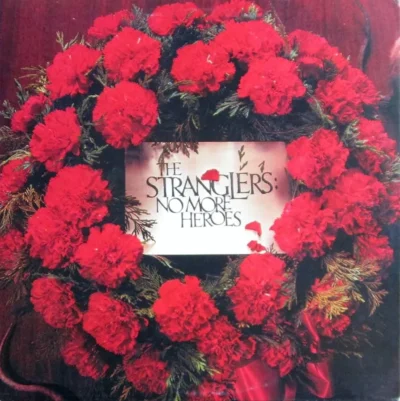
“No More Heroes” is both a landmark 1977 punk rock single and the critically acclaimed album. Released just five months after their debut, this record catches the band at their most combative and raw. during the height of the UK punk explosion, the title track remains one of the band’s most successful and enduring anthems. famous for its aggressive drive, prominent bassline by Jean-Jacques Burnel, and a swirling, distinctive keyboard solo by Dave Greenfield. The Lyrics Written by the band, cynically ask, “Whatever happened to the heroes?” and name-checks several controversial historical and cultural figures: revolutionary Leon Trotsky, comedian Lenny Bruce, art forger Elmyr de Hory, fictional character Sancho Panza, playwright William Shakespeare, and Roman Emperor Nero. Other notable tracks: “I Feel Like a Wog” A controversial, aggressive track later clarified by the band as anti-racist. “Bitching” Features tight instrumentation reminiscent of early new wave. “Dead Ringer” A fast, hard-hitting short track. “Dagenham Dave” Dedicated to an eccentric early superfan of the band. “Bring on the Nubiles” A highly provocative and intentionally tasteless song. “Something Better Change” The first single from the album “No More Heroes” “Peasant in the Big Shitty “Sung by keyboardist Dave Greenfield, featuring avant-garde synth elements. “Burning Up Time” Driven by a frantic pace and aggressive bass. “English Towns” A cynical look at regional British life.
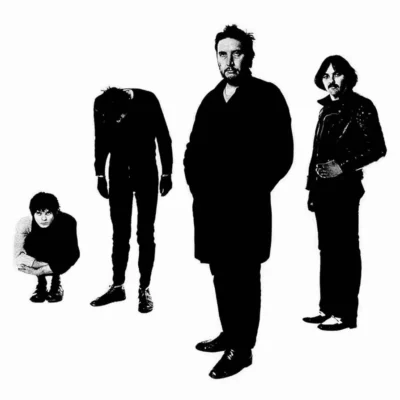
their third album, the extraordinary Black and White. widely celebrated as one of the very first post-punk albums, steering the band away from their pub-rock background towards a darker, more experimental, and dystopian soundscape. The record was uniquely structured as a concept album split into a “White Side” (tracks 1–6) and a “Black Side” (tracks 7–12). Shifting away from their earlier, controversial lyrical tropes, the album dives into themes of political paranoia, cold-war isolation, robotics, and historical figures like Yukio Mishima (Japanese novelist and playwright). The album was immediately notable for its tougher sound and attitude all helped by Martin Rushent’s best production for the band yet, Beefy yet minimal. a merciful lack of songs about how awful women were (Their humour was subtle and often overlooked by those who focused on the alleged misogyny and macho status of the members). In general terms post punk was darker and heavier than punk and was a form of music where every instrument played lead. The initial 75,000 copies of the album in the UK included a free bonus 7″ titled Black and White (or The Stranglers Tape), which featured the tracks “Mean to Me”, “Walk on By”, “Shut Up”, and “Sverige”.
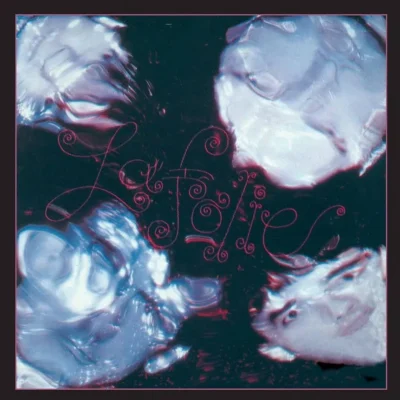
La Folie is the sixth studio album released in 1981 through Liberty Records. Translated from French as “The Madness,” it serves as a loose concept album exploring different, often dark aspects of love. Returning to commercial success after their previous album, The Gospel According to the Meninblack, underperformed. delivering their biggest global hit single, “Golden Brown”. It leans heavily into a sophisticated, European synth-pop aesthetic, wrapping dark lyricism inside beautiful melodies.“Golden Brown” features a distinctive, waltzing harpsichord melody played in an unusual alternating time signature and successfully masked its lyrical themes regarding heroin use from mainstream BBC radio programmers.. La Folie is a welcome album in the Stranglers’ oeuvre, mainly a collection of tight, punchy songs though acidic lyrics still predominate. the Stranglers show a new strength, from the upbeat pop rock of “Pin-Up” to droll cynicism of “How to Find True Love and Happiness in the Present Day” to the harpsichord-driven melancholy of “Golden Brown,” “La folie” truly comes to its own at the ending title, one of the Stranglers finest songs ever committed to record. Over a gorgeous, yearning synthesizer, Burnel half-recites, half sings in French, sounding alternately snide and sincere. The Stranglers would go on to more commercial success and even more stylistic changes, but they would never again capture the sheer weirdness of La folie. Of all their records, it captures their wit, romanticism and sarcasm in equal measure, within a brief 11 tracks done on their own terms. Now, that’s punk.
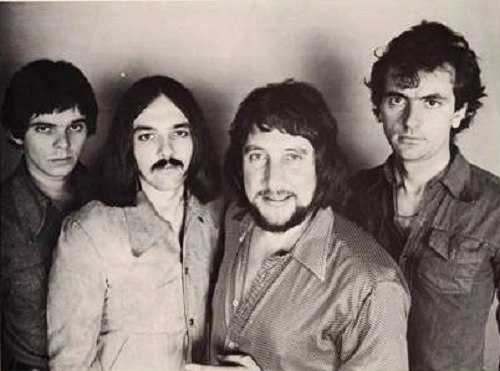
The Stranglers are an English rock band formed in Guildford, Surrey in 1974. The group’s classic line-up, active from 1975 to 1990, consisted of guitarist and vocalist Hugh Cornwell, bassist and vocalist Jean-Jacques Burnel, keyboardist Dave Greenfield and drummer Jet Black. Scoring 23 UK top 40 singles and 20 UK top 40 albums to date in a career spanning over five decades, the Stranglers are amongst the longest-surviving bands to have originated in the British punk scene.
Formed as the Guildford Stranglers in early 1974, they originally built a following within the mid-1970s pub rock scene. While their aggressive, no-compromise attitude had them identified by the media with the emerging punk rock scene that followed, their idiosyncratic approach rarely followed any single musical genre, and the group went on to explore a variety of musical styles, from new wave, art rock and gothic rock to the sophisti-pop of some of their 1980s output. They had major mainstream success with their 1982 single “Golden Brown”. Their other hits include “Peaches”, “No More Heroes”, “Strange Little Girl”, “Skin Deep” and “Always the Sun”. Cornwell was a blues musician before forming the band and had briefly been a bandmate of Richard Thompson, Burnel had been a classical guitarist who had performed with symphony orchestras, Black’s musical background was as a jazz drummer, and Greenfield had played at military bases in Germany. Their early influences included pre-punk psychedelic rock bands such as the Doors and the Music Machine. From 1976, the Stranglers became associated with the burgeoning punk rock movement, due in part to their opening for the first British tours of American punks the Ramones and Patti Smith. Notwithstanding this association, some of the movement’s champions in the British musical press viewed the band with suspicion on account of their age and musical virtuosity and the intellectual bent of some of their lyrics.
The band’s early albums, Rattus Norvegicus, No More Heroes and Black and White, all released within a period of 13 months, were highly successful with the record-buying public. These albums went on to build a strong fan-following, but the group’s confrontational attitude towards the press was increasingly problematic and triggered a severe backlash when Burnel, a martial arts enthusiast, punched music journalist Jon Savage during a promotional event.In 1979 the Stranglers released The Raven, which had a more melodic and complex sound. The songs on The Raven are multi-layered and musically complicated, and deal with such subjects as a Viking’s lonely voyage, heroin addiction, genetic engineering, contemporary political events in Iran and Australia and extraterrestrial visitors. Following the success of the Stranglers’ previous four albums they were given complete freedom for their next, The Gospel According to the Meninblack, a concept album exploring religion and the connection between religious phenomena and extraterrestrial visitors. It was different from their earlier work and alienated many fans. La Folie (1981) was another concept album, this time exploring the subject of love. At first La Folie charted lower than any other Stranglers studio album. However, the single “Golden Brown”. Taken from the album became their biggest hit. Shortly afterwards the Stranglers left EMI. As part of their severance deal, the Stranglers were forced to release a greatest hits collection, The Collection 1977–1982. Following the Stranglers’ return to commercial success, many record companies lined up to sign them and Epic Records secured the Stranglers’ services.
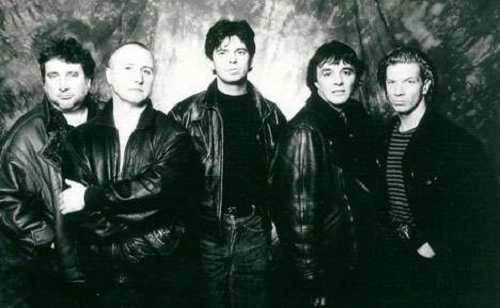
The Stranglers’ early sound was driven by Burnel’s heavy, melodic bass, but also gave prominence to Greenfield’s keyboard playing. Their early music was also characterised by the growling vocals and sometimes misanthropic lyrics of both Cornwell and Burnel. Over time, their output gradually grew more refined and sophisticated. Summing up their contribution to popular music, critic Dave Thompson later wrote: “From bad-mannered yobs to purveyors of supreme pop delicacies, the group was responsible for music that may have been ugly and might have been crude – but it was never, ever boring
The Stranglers once again had complete artistic freedom and in 1983 released their first album for Epic, Feline. 1984 saw the release of Aural Sculpture which consolidated the band’s success in Europe and established them in Oceania. Their 1986 album, Dreamtime, dealt with environmental concerns among other issues. The Stranglers’ final album with Cornwell, 10, was released in 1990. This was recorded with the intention of building on their “cult” status in America.Cornwell stated that he felt that the Stranglers were a spent force creatively and cited various examples of his increasingly acrimonious relationship with his fellow band-members, particularly Burnel. Feelings were mutual; when Cornwell phoned Jet Black to say he was leaving the band, the drummer’s response was blunt “OK, fine”. The remaining members recruited John Ellis, who had had a long-standing association with the band and enlisted Paul Roberts, who sang on most songs live, even those originally sung by Burnel. This line-up recorded four albums: Stranglers in the Night (1992), About Time (1995), Written in Red (1997) and Coup de Grace (1998). The Stranglers achieved something of a critical and popular renaissance in 2004 with the album Norfolk Coast and a subsequent sell-out tour. In May 2006, Roberts left the band and the Stranglers were now back to a four-piece line-up.Suite XVI, the follow-up album to Norfolk Coast, was released in September 2006 and continued the band’s resurgence. Although partly a return to the band’s heavier punk roots, the album featured a typically idiosyncratic mixture of musical styles which included a country and western style Johnny Cash pastiche/homage “I Hate You”. In 2007 it was reported that drummer Black was suffering from atrial fibrillation, an ailment which subsequently forced him to miss several shows, particularly where extended travel was required.The next decade saw much touring and festival appearances. An albumGiants was released in 2012. Black ceased performing on stage with the band after some partial-set appearances in March 2015, although he remained an official member of the band until his retirement in 2018. Greenfield died on 3 May 2020, at the age of 71. He had contracted COVID-19 while in hospital for a heart ailment. The band’s 18th studio album, Dark Matters, features contributions from Greenfield and is also their first release following the retirement of Black. It was released in 2021. After many years of health problems, Black died on 6 December 2022 at the age of 84.
Sound quality is important and the better online Streaming services will offer superior sound quality. As always, We do encourage you to purchase Favoured albums from good online or High street record stores.
The Stranglers – Rattus Norvegicus, No more Heroes, Black and White – label : United Artists ; La Folie – Label : Liberty (EMI)
Artists in upcoming issues: The ramones, Blur, Guns n' Roses, led Zeppelin, elvis Costello, ......Keep Listening!!
“Comments are most welcome and appreciated”